D20

You’re writing your autobiography. What’s your opening sentence?

If life is a game, then I must have rolled a natural 20 on my sarcasm stat, because it seems like I’m always cracking jokes at the most inappropriate times.

Freedom to be…

What are three objects you couldn’t live without?

What are three objects you couldn’t live without? It’s a question that may seem trivial at first, but upon closer examination, it reveals a lot about our priorities and values. For me, personally, I would say my phone, my passport, and my glasses. These three items enable me to navigate the world and stay connected to the people and things that matter most to me.

Let’s start with my phone. I’m sure many of you can relate to this – we use our phones for just about everything these days! Whether it’s checking our email, browsing social media, or streaming the latest episode of our favorite show, our phones have become an indispensable part of our lives. And it’s not just about entertainment – we can also use our phones for work, banking, and other important tasks that require our attention.

Moving on to my passport, this little booklet is a symbol of freedom and adventure. It grants me access to other countries, cultures, and ways of life that I wouldn’t otherwise be able to experience. Of course, there are limitations and restrictions to where I can go depending on visa requirements, but even so, the mere fact that I have a passport means I have the option to travel and explore new places.

Finally, my glasses. As someone who has myopia (or nearsightedness), my glasses are an essential tool for seeing the world clearly. Without them, everything would be a blur, and I would struggle to perform even the simplest of tasks. It’s incredible how much of a difference a small pair of glasses can make in one’s quality of life.

These three objects – my phone, passport, and glasses – are just a few examples of how certain items can hold significant meaning and importance to us. Of course, everyone’s list of essential objects will look different depending on their individual circumstances and needs. But the underlying message here is that objects can play a meaningful role in our lives, and it’s worth taking some time to reflect on what matters most to us.

So, what are your three objects that you couldn’t live without? Take a moment to think about it – you might be surprised at what comes to mind!

Logic dictates…

Do you believe in fate/destiny?

The concept of fate and destiny has been debated for centuries, with many people having their own beliefs and opinions on the matter. Some believe that everything happens for a reason, while others believe that we create our own destinies through the choices we make. As for me, I have a somewhat complicated answer to the question of whether I believe in fate and destiny.

On the one hand, I do not believe in fate or destiny as a mystical force that controls our lives. I believe that the choices we make in life, along with the circumstances we are born into, ultimately shape our future. Occurrences follow causality, meaning that our exact circumstances and choices will lead most likely to a similar or identical result. However, on the other hand, I believe in the concept of destiny as a fixed or most probable outcome.

In other words, the choices we make in life lead to specific outcomes that may be more likely to occur based on the choices that were made. This is what many people may refer to as destiny. Defiance of destiny is that infinitesimal 0.0000001% probability that the event may not occur if the correct changes are made in the choices that can be made up to the point when you know of the outcome you want to change. This is the main element that led to the choice made by Dr. Strange in the MCU during the fight with Thanos.

It’s important to note that destiny as a fixed or most probable outcome is not a mystical force but rather a logical thing to believe in. People will always do what they do when faced with specific situations, thus leading to a particular outcome assuredly. This is why we can look at certain historical events and see how they were likely to occur based on the choices that were made.

However, one thing that makes it difficult to arrive at any form of defiance of destiny or fate is the fact that human responses to specific stimuli are both fixed and unpredictable. New stimuli may lead to unexpected reactions, which can change the outcome of a situation. This is why it’s essential to keep an open mind and be adaptable in life, as we never truly know what’s going to happen next.

In conclusion, while I do not believe in a mystical force controlling our fate or destiny, I do believe that destiny as a fixed or most probable outcome is a logical thing to believe in. This is because our choices and circumstances ultimately shape our future, and while we can defy the odds at times, our choices and responses to stimuli are often fixed and predictable.

A Poetic Ode to the Bold and Cheesy Cheese Curls

I love me some cheese curls. I haven’t had any in quite a while and this morning my wife brought some home! While munching I thought “these deserve recognition!”. And silly as it may sound, here is my poem celebrating this delightful junk food!!

Cheese curls, oh so bright and bold,

Crunchy, cheesy, a joy to behold.

With their neon hue and twisted shape,

They make my taste buds come awake.

A salty tang that hits the tongue,

A crunch that echoes, a chorus sung.

A snack that’s perfect for any time,

From lunchtime break to midnight rhyme.

They’re the perfect partner for movie night,

Or for a snack on a lazy afternoon delight.

And when the craving hits me hard,

I’ll reach for the bag, oh so unmarred.

So here’s to cheese curls, oh so fine,

A snack that’s truly divine.

They may not be the healthiest treat,

But their taste can’t be beat.

Sheets Upon Sheets

Write about your approach to budgeting.

Budgeting is a no-brainer, essential part of financial planning. It helps you track your income and expenses and allows you to allocate your resources effectively. And yet few people really do it or stick to whatever they try to do based on ideas found on the internet. Creating a successful budgeting approach requires some thought and planning, but it also means you need to adapt as much as you can based on your own reality. Here’s my own approach to budgeting, based on some tips found both online and offline in my real-life work.

Step 1: I List My Obligatory Expenses

My first step in creating a budgeting approach is to list all my obligatory expenses. These include rent or mortgage payments, utility bills, groceries, transportation costs, and any other expenses that I CANNOT not pay each month. I put these expenses on an Excel sheet, using a column for each month and rows for each line of expenses.

Step 2: Include Debt Payments

Any outstanding debts are included in my budgeting approach. I write down the minimum payment required for each debt and plan to pay off more than the minimum whenever possible. You can also include a column for debt payments in specific months when you expect to pay them off.

Step 3: Add a Miscellaneous Line for Leisure Expenses

While obligatory expenses and debt payments take up a significantly heartbreaking portion of my budget, it’s also important to enjoy some leisure spending. To do this, I add a miscellaneous line to my Excel sheet, which can be about 10% of my salary. This line can be used for non-essential expenses like dining out, shopping, or entertainment.

Step 4: Use a Different Bank Account for Expenses

Using a separate bank account for expenses helps me stay on track as much as humanly possible with my budgeting approach. When I receive my salary, I transfer the allocated amount for expenses to this other account and use it for all my obligatory and leisure spending. This helps me avoid accidentally overspending. I won’t be able to spend more than what’s available in that account!

Step 5: Track Budget and Make Adjustments

Finally, it’s essential to track the budget and make adjustments as needed. I review my Excel sheet periodically and ensure that I’m sticking to my budget. If my income or expenses change, I have to update the budget accordingly. I also adjust my miscellaneous line as needed, based on my “discretionary” spending habits and also on any additional money I can make outside my salary.

Photo by Pixabay on Pexels.com

To recap, creating a budgeting approach requires planning and discipline, the latter being *extremely* important if you want to stick to it as much as you can. So I listed my obligatory expenses, included debt payments, added a miscellaneous line for fun expenses, used a different bank account for expenses, and tracked my budget. If it fits you, you could consider this approach and make any necessary adjustments to suit your unique financial situation.

Why Would I EVEN Tell You?

Have you ever broken the law and didn’t get caught, if so how?

Why would I reveal such a tale,

Of breaking the law, without fail,

If caught, the price to pay is high,

A risk too great to justify.

~~~~~~~~~~~~~~~~~~~~~~~~~

So let my secrets rest in peace,

For lawless acts must surely cease,

And while I may have slipped the net,

To speak of it, I can’t forget.

~~~~~~~~~~~~~~~~~~~~~~~~~

So let this be a lesson learned,

For any lawless act discerned,

The safest way is to abstain,

And avoid a life of shame and pain.

Raised with Love: To My Parents and Grandmother

What were your parents doing at your age?

At my age, my mother held the reins,

With my sister and me, she felt the pains.

My father lived apart, but still he cared,

Visiting us often, love he shared.

Both worked hard, to give us all they could,

Their love for us, pure, strong, and good.

My grandmother was a blessing, that’s for sure,

Supporting my mother, her love did endure.

Together they raised us, with grace and might,

Preparing us for the future, guiding us with sight.

Their lives they lived, with love and care,

Making sure we’d be ready, when they’re not there.

So here’s to my parents, and my grandmother too,

Their love and guidance, always shines through.

Forever grateful, for all they’ve done,

Their love and support, second to none.

End of the World, Beginning of Love

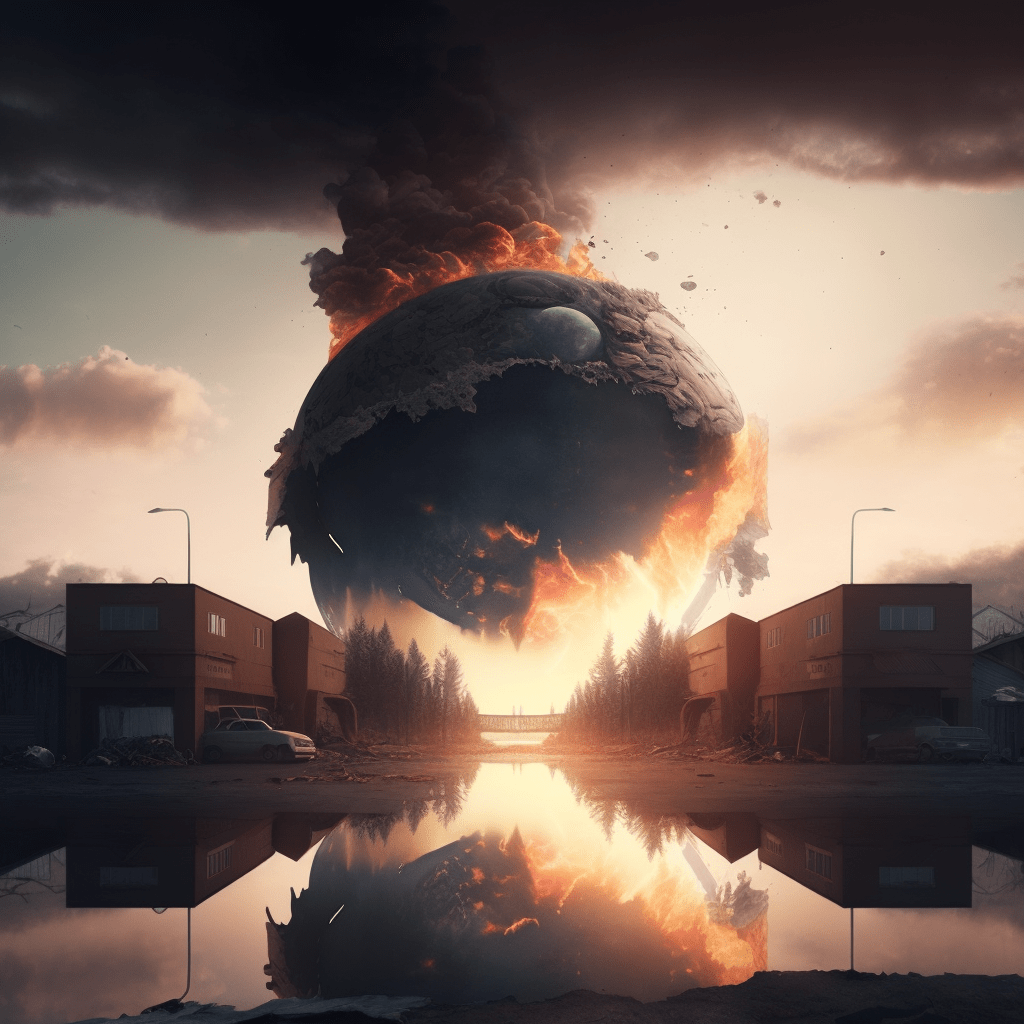
There is this song that very often appears on my automatic playlists. Listening to it so often, I think about certain specific movies I’ve seen and how they may have inspired it. “If the World Was Ending” is a song by JP Saxe that reflects on spending the last moments of the world with someone you love. It’s about cherishing our time with the people we care about. This is especially true in the face of an impending disaster. The song’s message is of hope and resilience in the face of uncertainty. It speaks to the idea that even in the darkest moments, we have the power to create moments of love and happiness for ourselves and those around us.

The song’s beginning: “If the world was ending, you’d come over, right?” sets the tone for the rest of the song. It establishes the central theme of wanting to be with someone you care about during a crisis. Next, the song describes the scenarios that might happen “if the world was ending,” such as “The sky would fall down, and you’d hold my hand.” These lyrics are a reminder of the importance of human connections and relationships.

The song’s chorus emphasizes the importance of being together in uncertainty. The lyrics “We’d be together, and that’s all that matters, right now” are a powerful reminder. No matter what happens, we can find comfort and solace in the presence of the people we care about. The chorus also speaks to the idea that love and compassion give life meaning, even in the face of disaster.

The message of “If the World Was Ending” is similar to the themes explored in many disaster movies. Notable examples include “The Day After Tomorrow” and “Armageddon.” In these movies, characters often face the end of the world and must come to terms with their own mortality. However, they also often reflect on the importance of human connections and relationships. Furthermore, they also vehiculate the song’s core message about the value of love and compassion.

In these movies, characters often choose whether to cling to their old lives or embrace new opportunities and relationships. The characters who decide to embrace new relationships and connections often find that they are better able to weather the storm and find meaning in their lives. Other movies like “Knowing” with Nicolas Cage present instead a case where the world truly ends. The main character does not survive as we’d expect, but he does face his destiny, his final moment with those who meant the most to him.

In conclusion, “If the World Was Ending” is a song that reflects on the idea of cherishing the time we have with the people we love, even in the face of an impending disaster. This message is similar to the themes explored in many disaster movies. Furthermore, it serves as a reminder that in life’s challenges and uncertainties, we can create moments of love and happiness for ourselves and those around us. Whether facing the end of the world or simply trying to navigate the challenges of everyday life, the message of “If the World Was Ending” is one of hope and resilience…

A reminder that we are never alone in our struggles.

RENGA

Renga is a traditional Japanese collaborative poetry form that was the precursor to haiku. It is a long chain poem composed of alternating three-line and two-line stanzas, with a strict syllable count for each line. The first stanza, called the hokku, sets the scene and mood for the poem, and later stanzas build on and develop the themes and images introduced in the hokku.

Renga was a popular form of poetry in Japan during the Edo period (1603-1868) and was often composed by groups of poets who would take turns adding stanzas to the poem. The subject matter of renga could range from nature and the seasons, to love, politics, and spirituality.

Over time, the hokku became more popular on its own and evolved into what we now recognize as haiku, which typically consists of just the first three lines of a renga. Haiku, however, is typically focused more narrowly on nature, whereas renga can encompass a broader range of subjects.

Renga is less widely known or practiced today than haiku, but it remains a fascinating and challenging form of poetry that can be both entertaining and thought-provoking. Whether composing a renga with a group of friends or exploring it as an individual poet, renga is a unique and interesting form of collaborative poetry.

Discovering the Beauty and Simplicity of Haiku: A Guide for Beginners

Haiku is a traditional form of Japanese poetry that has gained worldwide popularity for its simplicity and elegance. It consists of just three lines, with a strict syllable pattern of 5-7-5 syllables per line. Despite its small size, a haiku can convey powerful emotions, deep thoughts, and vivid images.

Photo by Yuma Kim

Haiku originated in Japan in the 17th century as a part of the “hokku”, which was the opening verse of a collaborative poetry form called “renga”. Over time, the hokku became more popular on its own and evolved into what we now recognize as haiku. The first recognized haiku poet was Matsuo Basho, who lived in the late 1600s and is considered one of the greatest haiku poets of all time.

Haiku traditionally focuses on nature, capturing a moment in time and a sense of the seasons. The best haikus evoke a clear image or feeling and often use sensory details, such as sights, sounds, or smells, to create a connection between the reader and the subject of the poem. The final line of a haiku often includes a “cutting word” that provides a sudden turn or shift in thought, adding depth to the poem.

Photo and Haiku by Poppy Thomas Hill

In its traditional form, haiku is written in Japanese, using seasonal references and a strict syllable pattern. However, modern haiku has evolved and expanded to include poems written in other languages and subjects beyond nature. Some contemporary haiku poets may also play with the syllable pattern, using fewer or more syllables per line.

Haiku has gained popularity around the world as a form of poetry that is easy to write and appreciate. Many people enjoy writing haikus as a form of self-expression and as a way to connect with nature and their own emotions. Haiku has also been used as a tool for meditation, mindfulness, and stress relief.

Haiku continues to evolve and adapt, with new forms and styles emerging all the time. However, its core elements remain the same: a focus on nature, a strict syllable pattern, and a desire to capture a moment in time and evoke a strong emotional response.

Photo and Haiku by Poppy Thomas Hill

In conclusion, a haiku is a form of Japanese poetry that has stood the test of time and continues to be popular and relevant today. Its simplicity and elegance make it accessible to poets and readers of all levels, while its focus on nature and the emotions it evokes make it a powerful tool for self-expression and mindfulness. Whether you are a seasoned poet or someone just looking to try your hand at writing, haiku is a wonderful form of poetry to explore. Stay tuned for a short overview of “Renga” coming soon on this blog!