How to Maximize Meditation to Relieve Stress (A beginner’s guide)

Featured

Life in this era has become more complex. A lot is happening worldwide, and everyone is trying to catch up. In a bid to stay abreast with the vicissitudes of life, our health gets threatened. Sometimes, our health could get threatened without us being aware. When this happens, stress sets in.

Stress is simply your body’s reaction to changes that affect you. These changes could be emotional, physical, or even psychological. One of the most effective methods of managing stress is meditation.

This article discusses meditation, what happens to the brain when you meditate, how to achieve the maximum result and the challenges you may encounter in meditation.

What is Meditation?

Contrary to popular belief, meditation does not involve keeping your mind empty so that you don’t think about anything. Meditation is not like that; in fact, quite the opposite. A person can achieve a state of calmness both mentally and emotionally through the practice of meditation. This is done by practicing paying attention and being aware. Focusing on a particular thing could be a part of this training. It may seem a bit difficult for someone who has not done this before.

What Happens to Your Brain When You Meditate?

1. Areas of Your Brain That Strengthen Memory and Attention Are Further Developed

Neural connections are how the brain functions. As you repeatedly perform an action, the neural pathway leading to it is strengthened, making it easier for you to access. For instance, when someone first learns to play the guitar, everything appears to be complicated. However, if he persists for about 3 years, he will eventually master it and find it simple. Simply put, it’s because that brain pathway has been established. When you meditate, the same thing takes place. The brain’s learning, memory, and self-awareness pathways evolve over time.

2. Meditation Relaxes Your Sympathetic Nervous System

The fight-or-flight system is another name for this nervous system. The brain is unable to decide whether to fight or run when you are in a dangerous situation. Stress hormones are released whenever there is an apparent threat. A person is said to be stressed when this happens frequently.

You activate the parasympathetic nervous system while meditating, turning off the sympathetic nervous system. Meditation can therefore help lower stress.

The Basic Ways of Meditating Are:

– Observing Your Thoughts

Contrary to popular belief, this approach does things a little differently by allowing thoughts to pass through your mind. Here’s what you do in place of forcing your mind to be empty of all thoughts: As the thoughts arise, tag them and then release them. For example, you might be in the middle of your meditation when you realize that you have only one day left to finish the project you were given. Instead of breaking out in a panic and saying, “I need to go and get back to work, so I don’t fail,” simply label it and continue your journey.

– Focusing on Your Breath

This one is influenced by Buddhist custom. It simply entails paying attention to your breath. You already have something to fixate on when you focus on your breath. Your focus should be on breathing in and out while doing this.

– Body Scanning

Here, as the name suggests, you scan your body. You merely shift your focus from mental thoughts to each individual part of your body, one at a time. Up until you’re finished, you move from one area of your body to another. You can begin by concentrating on one side of your face, then work your way up to your head before moving back down until you have focused on every part of your body. You’ll notice that each time you scan down a specific area of the body, you become aware of sensations that could be pleasant or unpleasant.

You should combine all three of these techniques in order to get the best results while meditating. You must be aware of your thoughts, your breathing, and, eventually, your entire body. You shouldn’t start by scanning your body because it might distract you. Later, you can proceed to that. You should practice concentration, contemplation, and meditation.

The Following Factors Must be Considered as They Will Play a Role in Helping You Achieve the Maximum Result

The first thing to think about is time when beginning a meditation routine and how to make the most of it to reduce stress. You have to be prepared to make the time. It’s not necessary to set out for an hour or two when you set a time. It might only take five or ten minutes, and you can add on from there. The capacity to learn is another crucial element. At different times in our lives, we all pick up new skills. You won’t be able to make any real progress if you don’t acknowledge that you are still a learner in this area.

1. Setting Out Time

A timer could be used for this. It is simpler to do it while using a timer. Although most people meditate in the morning and evening, if you’re just starting out, you can meditate by yourself in the morning. It is crucial to remember that setting aside time each day for meditation can have a significant impact. This is so that when the designated time arrives, your body begins to signal that it’s time to meditate. Over time, your body and mind will align with the designated time.

Just take it one minute at a time when you feel ready to extend the time. Be patient, and don’t rush. The key to this process is not to think about it too much.

In the event that you do not reach your goal, you must learn to be patient with yourself. It’s important to treat yourself nicely. You should celebrate your achievement and all the positive things that come from it, but when you are done, get back to work on improving yourself.

2. A Good Place

Finding a suitable location and making the time to meditate are both crucial. You require a quiet area free from disturbances. A room with every amenity may not be necessary. Just a peaceful area will do. You can keep your mind still by doing this.

3. Warm-up

Like when you start exercising, you might need to warm up before you start. Yoga poses could be used to warm up. Note that this is not necessary.

4. Positioning

The posture you adopt before starting to meditate is crucial. Simply be at ease while sitting on the ground, a chair, a table, etc. The idea is to stand up straight with your spine in a neutral position. This enables proper energy circulation and an even distribution of your body’s weight.

Additionally, you have the option to raise your hands or place them on the floor or on your lap. You can choose whichever feels most comfortable to you. You must feel at ease before you can practice effectively.

5. Your Breath

You may need some practice to get the hang of focusing on your breath, but here’s where to start. Keep your eyes closed and remain in your chosen position. As you take your breaths, think about them. Avoid making any changes to your breathing pattern as much as you can. Use your entire diaphragm, and let it be natural. Just breathe normally, without going too quickly or slowly. You might want to up it once you start to get the hang of it, but don’t!

If it will help you focus, you can decide to keep track of how many breaths you take. Simply labeling thoughts as they arise will allow you to let them go without building on them. When you find yourself drifting, stop yourself right away and start counting your breaths again. It might take some time to accomplish all of this, but with practice, you get better.

6. End of Practice

Don’t just fly off after your meditation session is over. Spend some time thinking about how you felt before starting your meditation and how you felt afterward. Stretch out gradually before standing up.

Challenges You May Encounter

You might have trouble as a beginner trying to meditate to reduce stress. It’s important to remember that everything is a process, and things get better over time. Everyone who practices proper meditation now did not begin by doing so; instead, they all ran into difficulties. Several of these difficulties include:

– Sleep

The same region of the brain that is activated just before falling asleep is also activated during meditation (especially in the beginning phase). By meditating in an unfavorable setting, you can avoid falling asleep. For instance, you can sit while you meditate rather than lying down (which may be tempting). You don’t have to meditate in your bedroom; you can do it somewhere else. Try meditating while keeping your eyes open as well. The first few times you try to meditate while keeping your eyes open will be challenging, but it gets easier with practice. In addition, you can mix it up and try meditating while walking or sitting in a chair.

– Doubt

You would occasionally wonder if you were acting morally or if you were just wasting your time. This is due to the fact that, almost like with anything that begins, changes don’t become apparent right away. You can be confident that you are acting appropriately as long as you continue to meditate. With time, the outcome will speak for itself.

Conclusion

One of the best practices you can use in this day and age when we are constantly being bombarded with activities is to make the most of meditation to reduce stress. One of the natural ways to reduce stress is through meditation; if done correctly, it can help you lead a happy and healthy life.
What Makes A Great Western RPG?

Featured

If there has been one genre that has captivated gaming audiences more than any other in the last decade, it is the RPG genre. We have seen some of the most genuinely staggering adventures delivered to our screens by very talented western developers. Each presents unique quirks, art styles, mechanics and narratives that make them stand out within a very saturated field. That’s right, there are hundreds of AA and AAA RPG titles made every year, but only a handful get their time in the spotlight.

Not every game can be a Breath of the Wild, an Elder Scrolls or The Witcher 3: Wild Hunt. However, there is a particular formula that makes a successful RPG game. While that may not be too clear from the outside looking in, we aim to delve deep into the phenomenon and find out what makes these games so popular. So, without further delay, here is our guide as to what makes an excellent western RPG.

#1 – An Expansive, Detailed World

First and foremost, you need a setting that is conducive to the RPG title. This means you need a unique environment rich in lore, visually appealing, full of exciting characters, fauna, wildlife, different cultures, biomes, and groups that underline the world’s population’s most essential morals and beliefs. It’s about making the world feel like a complete escape from our own yet giving it enough similarities that we can still find relativity with our real-world ideas and opinions.

Take Fallout New Vegas as an example, a post-Apocalyptic world full of mutants and ghouls. Yet, at its core, this is a world that has left and right-wing political parties fighting for control of the state of Nevada, much like modern-day America. So, in short, make the fantasy detailed, unique, and relatable.

#2 – Emergent Gameplay

The second point relates to emergent gameplay, which for those unaware, means gameplay that will differ from player to player. If you are playing a role-playing game, you crave those moments that you can clip and share with your friends. An odd glitch, a moment that defies physics, an NPC mishap. Anything that makes the experience different from other players. Arguably, western RPGs do this better than any other genre. Their enormous scope allows for many different approaches, enables players to make different decisions and ultimately, has them live with the consequences of their decision. Without this, it’s a rather hollow experience, so a good western RPG needs alternative choices and consequences.

#3 – The Freedom to Role Play

Another aspect of a good western RPG is the ability to play your own way. You can play the main story, prioritize side quests, simply wander aimlessly, or you could sack off the whole potentially world-ending plot and become a chicken farmer. No matter what the player’s desire is, the game must allow for this eventuality.

Compare Fallout 4 and Red Dead Redemption II, for example. While it is hailed as one of the best RPGS of its time, this is a shortcoming. Almost every quest has one set method for completion and in terms of the time in-between. Aside from building your settlement, there are few grounds for role-playing. Whereas in RDR2, you can approach the quests in some ways, you get graded on your approach and in the lulls in between, you can hunt, fish, upgrade your camp, rob, steal and generally cause chaos. In short, RPGs need to allow for roleplay, plain and simple.

#4 – A Strong Progression System

One of the critical components to a western RPG that keeps players engaged long-term is a cohesive leveling and progression system. This system needs to help you build the character you want, give you new skills that allow you to manipulate the in-game world with ease, open up new areas and mechanical possibilities to the player. Plus, all this info needs to weave together seamlessly and inform the player very clearly. So, the UI needs to be on point.

One of the best examples of excellent progression systems would be Disco Elysium. It allows you to gradually build your character’s personality and uncover a mystery as you progress. Or on the flip side, games like Horizon Zero Dawn and the Middle Earth series do a great job of offering more mechanical options to the player, giving them a heightened sense of power.

#5 – Varied Gameplay Mechanics

Then to ride on the coattails of the last point, the mechanics and gameplay within these titles need to be varied, ever progressing and most importantly, fun. This means that players should be constantly given new quests, game modes, combat skills, weapons, loot, vehicles, be continuously challenged with new enemies and bosses. Plus, the game should be balanced so that one play style isn’t inherently better than another. We are looking at you, Skyrim, with your indulgence for stealth archers.

One of the best examples of constantly progressing game mechanics that keep the game feeling fresh is Stardew Valley. This relaxing and straightforward RPG (though neither a western RPG nor a JRPG) utilizes simple farming game mechanics. However, as the game progresses, even up to three or four years into your campaign, new mechanics and content are hurled your way. Showcasing that even with limited scope, you can still provide gameplay that evolves as you play.

So that is our breakdown of what makes a western RPG successful. What do you make of our list? Do you think that we left out any key components? What is your favorite western RPG of all time? Let us know in the comments section below and as always, thank you for reading.

Resident Evil 2

Featured

The release of Resident Evil 2 back in the day was a landmark moment for many gamers of my generation. Back then, lines weren’t quite so drawn between who gamed X or Y platform. We each had diverse consoles, Sega was still in the race with the greatly underrated Dreamcast released the same year. It was all a big melting pot of sharing games and consoles. Like many of my peers at the time, I only owned one console but bought many games for all the home devices on the market. We’d share around both our games and devices, to the enjoyment of all. Even playing single player games like Resident Evil 1 was a community effort where we all sat down and played. It was a great support system especially after experiences the jump scares, alone, at night. You just wish you had your buds next to you for support.

Incidentally, I remember my troubles during the PS1 era. I was adequately a big N follower (I still am but as maniacally). I did not have a Sony console and would not have one until the end of the PS2’s life cycle, during the peak of the PS3. Playing games such as RE mean leaving the borrowed console powered on and restarting entire levels after death because I did not have a memory card. This was resolved soon enough and I made it a point thereafter to always obtain every means of saving games possible for whatever console came out. I did not have the devices but you can bet I had their cards somehow. All of which was defeated once consoles started shipping with internal hard drives.

RE2 was difficult back then, like many games of the time. It was more than a question of the clunky controls (yes, we all remember the characters were actually two-legged panzers…), but the sheer level of unforgivingly slim margin for error. Furthermore, it was quite scary in a way we did not expect. It wasn’t the first “horror” game I played. But it was the first one on consoles for me, and it went to lengths I did not expect for a home medium which is usually rather colorful. I would expect this on most of my PC games but not here. Side note: I was for a very long time 80% PC gamer with 20% left for exclusives on consoles that may interest me.

Resident Evil 2 in 2019 is all of that…..times 10.

I am glad to see that most reviews also agree with this and it is not unexpected. Technology in the past gave us the best version of RE2 that it could. Technology in 2019 just gave us the means to play the RE2 that we, gamers, deserve. It’s a great start for those who never played the classic version. But, in my opinion, those who grew up with RE, like me, will enjoy this the most. This is not a review, it is an opinion and a bit of advice to go play it.

Now, excuse me while I go pray to the universe that someone does Silent Hill 2 at least half as good a service by remaking it to THIS stellar quality.

Opinion on Starlink: Battle for Atlas

Featured

About now some of you interested in gaming have heard about “Starlink: Battle for Atlas”. Given the price point of entry, a lot of regular gamers will want to try it out in digital or physical versions just for the sake its genre mash-up. As put by a few YouTubers, quite rapidly after release, this game should have been called Starfox’s No Man’s Skylanders. Obviously from the name, one can easily deduce what trifecta? it seems to heavily inspire on.

Ubisoft may have stricken gold with this in all forms. There is most prominently the physicality of the regular (non-digital) versions of the game. All console base versions come with a physical ship and a pilot, except for the Nintendo Switch version which comes with Starfox as a pilot along with his trusted Airwing ship and another pilot from the game’s story. This is all well known at this time and been covered by games media. Consequently, for those who rather dislike digital versions of games, they will necessarily try out the toys even if they never were quite fans of such things. Heck, some people may discover they like actually having a physical ship on their controller to maneuver the ship on screen. And let’s not forget the compulsive collectors… As a result, a percentage of buyers will end up purchasing an upgraded weapon or extra ship/pilot pack and what will this add up to? Bundles of cash for Ubisoft!

By now, from reviews and videos, a lot has been said concerning the gameplay etc. As a reminder, whatever version of the software you opt to buy, this is and remains the most Starfox game ever, even for those who do not have the Switch version ; it is also the No Man’s Sky we were promised on day one as well as a great Skylanders type of game (toys to life). Which explains the long moniker used to create the new title lol. Controls are satisfying for me, although it can take a while to remember Starfox strategies from my old days, they are important in order to easily survive.

I have to point out, if it weren’t obvious to some, how Ubisoft is doing an amazing support of the Big N of late. They even have the very latest Assassin’s Creed on the Switch, albeit in streaming version only. Sure, it’s only in Japan for now, but even if it never makes it to the West, the fact that it was *done* anywhere at all is amazing. We already saw during the 1st year of the Switch how surprisingly good Kingdom Battle was. It was a true Rabbids game (those guys are nuts!) and a true Nintendo game with an Xcom framework. One does begin to see the mash-up trend does one not?

Ubisoft showed well how certain games can translate “well” to the platform and how AAA Third Party games don’t need to be just ports of past iterations. And now, with this new IP, they have made a multiplatform game where the best version in terms of content(both digital AND physical) happens to be on the Nintendo Switch.

The other versions are great in terms of technical performance since they are on much stronger platforms. Nevertheless, having both a PS4 and a Switch, it was a no-brainer for me as to which version of Starlink would be worth my money. Starfox means something to me. It was the very first game I possessed on the N64 and one of those out of which I got the most enjoyment with my friends (split-screen battles!). With all the extra dedicated story content, seeing the characters in a space exploration action-adventure is awesome. Without them, without the related exclusive content, Starlink still feels like an open-galaxy (see the wordplay there?) Starfox without humanoid animals.

Ubisoft is on a roll with the Switch. I actually feel like trying the newest Assassin’s Creed although I had sworn them off after AC: Unity. There is hope that the company has taken a form I can like again. Needless to say, Starlink BfA is one game I highly recommend to at least try. I have completed so far the entire main story as well as the Starfox content. There is still much to do such as completely scanning the fauna and flora, getting rid of Outlaw bases (I annihilated the dreadnoughts as soon as I could though). It’s just too bad there doesn’t seem to be a demo available. It would be so much more beneficial to the publisher in my opinion. At least half those who would’ve experienced the demo would surely buy it( by the way, it’s almost half off the price at the moment at most retailers).

Boss Fight Books 17/19: advance reviews

Featured

Books 17 and 19 of Boss Fight Books series happen to be from two different seasons. Book 17: Katamari Damacy is the final book of season 3 while Book 19: Shovel Knight is the second book of Season 4. Having read all the books released thus far, it’s quite striking to notice the difference in feel among them. Season 4 of BFB is dubbed “Creator Access Edition”. As the name suggests it focuses most on the different studios and people involved in the creation of the chosen focus of the books. In contrast, many of the past books in this series were so much more about describing the games themselves in their intimate entirety in regards to narrative, but also the relationship of the author to said games. I should point out then that one of the books which most related to the author was Spelunky, Book 11, written by Derek Yu….the games creator!

As a backer of the season 4 of Boss Fight Books on Kickstarter, I am entitled to the entirety of the series up to the current season. Nevertheless, I received advance copies of both books for the purpose of this review. A big thanks to BFB and Gabe Durham for this opportunity! On with the books…

**Katamari Damacy

kata

Katamari Damacy is one those strange quirky games that your best friends may frown upon when they see you playing it, but secretly itching to get their hands on the controller. In my mind, I have difficulty dissociating it from Patapon which elicited similar reactions from my peers whenever I was found enjoying it. As the author points out in this books, this is a work leaning most on great gameplay, novelty and fun. It is a work of art in that it can be interpreted in depth despite its simplicity, it presents not the shallowness often coupled to the superficial fluff of improved graphics at the time. To this day I do not really always care about how pretty a game can be; a lot of people are rediscovering this fact in themselves, the critical acclaim and the sales of Octopath Traveler attest to that.

As the final book of Season 3, Katamari Damacy takes an approach more similar to the books of Season 4. It focused a lot on the creator’s journey up to and beyond the release of the game. I felt a great parallel between it and Shovel Knight which releases with it in a few days. The author did a solid overview of certain culture particularities related to the Japanese which quite frankly would have gone way over our western heads had he not written about them. Those part are some of the most interesting, more creators should, with their cultures, be this unapologetic about their unique aspects.

**Shovel Knight

Shovel

This book takes a very investigative approach to its subject. It is very more in line with my thoughts on what creator access should be, and very special in that it is as much the story of WayForward (WF) as a company as it is about the IP itself. Many publishers have had their story told and retold in a way that we could actually recite them verbatim. Examples of this are Id Software, Nintendo, Square-Enix. The story of WF relates as they represent in a way the dreams of many of us gamers who dreamt of being creators, and at the same time, they have lived through some of the hard times that we can easily imagine happens when one takes the route of independent development. It is not difficult to understand that many such teams of developers never survived beyond a game or two. Following their journey towards themselves as a group of friends and colleagues become something bigger, then towards their dream which culminated in one awesome modern NES game, was a blast. Theirs was a true journey, with many downs but their ups reached some interesting peaks to balance everything out. I would not mean to spoil anything from the narrative, nevertheless, I must that it was amazingly serendipitous that so many of their favourite creators from the golden era of the NES/SNES could meet with them, even collaborate in Shovel Knight!

Both of these books achieve their goal and the research/interviews were well done for me. Naturally, I do find myself partial to any story of an indie studio, whether of success or failure. If Katamari Damacy had focused more on the big publisher (Namco) instead of the true creator hidden behind this corporate juggernaut, I would not have like it as much. I enjoyed both books, and I recommend both, especially Shovel Knight simply for the fascinating tale of Wayforward Studios. Both Boss Fight Books come out in a couple of days. They can be easily found on Amazon: Katamari Damacy (Boss Fight Books Book 17) and Shovel Knight (Boss Fight Books) or at Boss Fight Books.

A Tragic, Yet Beautiful, Truth 

Mended in light… it endures.

Prelude: The Soul Awakens

Truth is as absolute as it is subjective. The reality of our convictions may lead us toward certain choices, but even as we make those choices, we often know deep inside when we are lying to others… and to ourselves. The truth can hurt, and in our delusion, we may want to defy it. The truth can heal…if we accept it, if we accept the pain that comes with it to face the other side. And no matter what we may want, reality is what it is. “See things as they are and not as we want them to be,” to somewhat quote Renoir and Verso from Clair Obscur: Expedition 33

Most people, non-followers especially, who stumble upon this opinion post already know about the game, and as such, you all know that it is, in truth, a work of art. It is so painfully European at its core, or rather, very non-American. It is an echo of the past we so adore, a modern transformation of classical tragedy into the most popular medium of our era. The premise of the game is a very meta outlook on art. The protagonists, members of the Dessendre family, are Painters; their art is alive, it lives on its own, and in being alive, it carries the soul of those who painted it. 

In this sense, it truly resonated with me. I was moved by how, much like what I have written in the past, be it poems, prose, or ramblings, the art of Clair Obscur takes on an independence of its own, becoming more than what the Painter initially created. Often, I have felt that for us, the creators, poems are like living things too… just like a child is its own being, though it came from you. I have often gone back to read what I wrote years later and found myself surprised by my own writing. The words are the same, sure, but they feel… different. Are they truly mine? Did I write them? Those words feel like a world of their own, going on without me. And through them, maybe I will live on. It is in this same sense that Verso lives, though he died. A part of him lives on…literally…as the canvas he painted lives on.


Creation as Soulwork

And so, Painters and the enigmatic Writers from the world of Clair Obscur are the artists and poets of our world. I will not tire of repeating it: they pour pieces of their soul into their creations… and those creations live on. And in doing so, we are not forgotten. How long has it been since Da Vinci died? Since Corneille? And yet, we speak their names still. We recite their words, admire their art. They live on. 

Verso lives on inside the Painted World in more ways than one. There is hope that I, as a writer, will also live on within my art. The world depicted in Clair Obscur goes through extremes permitted by the liberalities of artistic vision. Aline recreating Verso as a version similar to the outside world is an exaggeration that may never come to pass. But it is meant to be symbolic of how our families, a mother, needs her loved ones to live on, to give herself hope. Aline used this method to deal with her grief, losing her son, and the resulting shattering of their family. What happened to cause this? It is still a mystery that may, perhaps, be solved in another story within that universe. 

If there is tension between Writers and Painters, I feel that there should instead be harmony. As a writer myself, I feel an echo of what the Painters have done. I suppose the Writers in that world hold the same power in a different form. Sometimes, the word or the art simply wants OUT. We express, if only in different ways. Our expression relieves us. We are free of the burden within us. In my own small pieces, I express what I feel, what I cannot say nor publish sometimes. In some way, the unsaid must be expressed, in whatever form. The art is made not for the entertainment of others, but for our own release. 

This is where Clair Obscur most triumphs. It is clear (to anyone who plays, and even to those who do not play but at least take time to listen to the 33-minute musical piece “Nos Vies en Lumière”) this was a glorious expression of multiple forms of art. It was not made to check investor boxes. It was not made to cater to the whims of executive management. It was simply put out into the world because they could…because they wanted to. And it is the better for it.


The Tragic Heart of the Game

If I had to boil it down to just three emotional moments…three moments that shattered me, even more than the grand finale…they would be: 

a. Gustave’s death 
b. The fight and farewell to Renoir 
c. The demise of the Paintress 

I’ll say it clearly: I saw the end coming. The grand finale didn’t surprise me. But these three did. 

The first, and most jarring, was the death of Gustave. Or rather, the annihilation of Gustave. I, like many, assumed he was our protagonist. JRPG convention, after all, tells us that the first character we control is the main character. Gustave had charm, depth, flaws, and strength. And then, he was utterly erased. It reminded me of the first time someone watched Game of Thrones without reading the books: Ned Stark’s execution. That moment when your brain realizes, “Oh. All bets are off.” That’s what happened with Gustave. That’s when I knew this wasn’t a “safe” story. 

It’s also when I knew this game was unmistakably European. 

Western, particularly American, storytelling tends to protect its protagonists. The hero overcomes, wins, defies fate. But in European tragedy, fate is rarely kind. The small man does not win. The child does not always grow up. Sometimes, the innocent fall, and that is that. It is bitter, it is human, and it is true. Tragedy is the most probable outcome. Even in the fantastical Painted World, this harsh principle holds. 

Renoir’s final battle and his painted echo’s fall hit me next. This man, the real one, wants to end his wife’s grief by destroying the Painted World. But the Renoir we fight is also Renoir…his essence, his longing to keep the family whole. His painted self becomes Aline’s protector, even as the real Renoir fights to save what’s left outside. This inner conflict, this mirroring of desire and pain, broke me. Renoir vs. Renoir. Love versus love. A tragic symmetry. 

Then there’s Aline, the Paintress. Her final moment is more than about loss, but it is about surrender. She built the Painted World to keep her son alive, to keep herself alive in his presence. She is fragile and fierce. She is terrible and tender. She has become the world’s soul, and in leaving it, she is undone. Her grief was the brush; her son, the canvas. And when she falls, a kind of silence settles. 

Americans might call all this drama. But no…this is Tragédie. Real, aching, brutal tragedy. And that’s what makes it beautiful.


Poetry and the Painted World

The Painters built with color. I build with words. But both are mirrors for what the heart cannot say aloud. 

Mirrors don’t show everything though… 

Sometimes they shimmer and blur. 

They hold back what would blind us if we saw it whole. 

We keep writing and painting, hoping to catch a glimpes of what hides behind the surface of reality, within us and without. 

“In Clair Obscur, the Painters pour their souls into color until the canvas itself becomes alive. I sometimes wonder if writers do the same with language. If every metaphor, every unfinished line, is a tiny echo of us trying to stay. 

Just like the Painters, what we write brings life to a world that we experience through our mind’s eye. In some cases, it can be so distinctive and precise that we all see the same feel the emotions with the same intensity. One great example is what Peter Jackson did with the Lord of The Rings. Tolkien did a great job, so much so that when I saw the movies, it was as if Jackson read my mind and brought to life all that I imagined in almost the same way I saw it. 

Personally, writing is an exhaust for my soul. I write my loneliness, my sadness, and even my secret love. Through writing as through painting or any form of art for that matter, we create a space that carries what cannot be said aloud. Love, anger, longing, despair, truth. 

This is where poetry comes in as a potent medium for expression of the unspeakable. A Haiku is a great example of this, expression condensed into a pure supernova of meaning like the densest stars. 

Like a dying star, the Haiku is weight and fire compressed into a single instant. Only the essence remains at it burns away everything unnecessary. An entire landscape, or whole paragraphs…in 17 syllables. 

Brevity can wound…. A few syllables, and suddenly you’re holding the universe in your palm. 

That is why I keep writing, here or there, and even in my mind where whole drafts drift into the ether once written. 

Every poem,  

every line,  

is a way to make peace with what refuses to be forgotten.


In Spite of Everything

We refuse to let silence or void have the last word. 

In every act of creation there is a quiet, yet fierce, defiance. The world turns, it does not need beauty or pain to keep turning. Still we never stop offering it, could our small gestures convince time to be kind? The answer does not matter. 

In spite of everything, we create. Creation helps us to survive ourselves. It will not or may not save us…but we will live on.  

Verso poured his time and soul into his canvas. Even after his unfortunate demise, he lives on within. His art persists, along with a piece of him. It never fades, and this is why his mother Aline could not let go. Like us, she cannot escape the darkness, hence she chose to reshape it by recreating her family inside of Verso’s world.  

We do not throw our pain away, our joys, they are part of us and we endure.  

Like in kintsugi we rebuild…where it sticks the pieces back together with golden seams, we mend what’s broken with light. 

We celebrate who we’ve become and we define ourselves through this expression in our art. 

In spite of everything, we shine on. Our light is fragile, but it is eternal. Made more beautiful by the darkness within which it blooms…


Epilogue: Forward Glance

The light, soft and patient, lives beside the dark. 

Because in the end, I don’t think we truly ever conquer grief. 
We learn to walk with it… 
to let it illuminate what remains. 

Nos vies en lumière… our lives in light… 
Less like an ending, 
more a gentle afterimage. 

We may vanish, 
but our echoes paint the sky. 

Every act of creation leaves a trace, faint yet enduring. 
The Painters poured their souls into color; 
we pour ours into words, melodies, gestures. 
When the hand that shaped them is gone, 
something still moves within the work … 
a shimmer, a breath. 

Perhaps that is how we live on: 
not in permanence, but in persistence, 
like light bending around absence. 

Aline knew this. 
She tried to hold her son inside the painted world, 
not out of madness but memory. 
In doing so, she built a monument 
to what love cannot surrender. 

There’s something sacred in that desperation… 
the refusal to let beauty die 
simply because the body that made it has fallen silent. 

Maybe all art is a form of reaching back… 
an open hand extended across the blur of time.

Mirrors, poems, and brushstrokes … 
they all reflect a little of the same light. 
Each tries to remember what reality forgets. 
We mend ourselves with color and sound, 
we rebuild with gold and grief. 

Even the cracks, once filled, catch the sun differently. 
That’s why the broken things gleam. 

The music of Clair Obscur lingers in my head… 
that final theme, Nos vies en lumière. 
It feels like forgiveness sung into being. 
Not triumph, not closure, 
but a quiet continuation. 

The kind of melody that hums beneath your breathing 
long after the speakers go silent. 

Maybe that’s what it means to live in light: 
to become resonance. 
To accept that our stories will fade, 
but the feeling they leave… 
the tenderness, the awe… 
will echo in someone else. 

We may vanish, yes… 
but our echoes paint the sky.

A Tale of Two Invasions

Two invasions. Two betrayals. Only one left a scar.

For years, comic book fans whispered two words with both hope and dread… Secret Invasion.

The 2008 storyline was a sprawling, paranoid epic that changed everything. It asked one simple, terrifying question: Who do you trust?

So when Marvel Studios finally announced a Disney+ adaptation, it felt like destiny. This was the one that could shake the foundations of the MCU… the one that could bring back that sense of unease and cosmic paranoia that comics had captured so well.

But when Secret Invasion arrived, it felt curiously quiet. Less like a universe-shattering event, more like a muted spy thriller uncertain of its own identity.

It’s not that the show lacked potential. The bones were there — Nick Fury facing his own moral exhaustion, shapeshifters testing the meaning of identity, a planet teetering on the edge of distrust. But something essential was missing. The story that once made readers question every mask and every hero ended up feeling strangely contained… flat, even.

Its threat was supposed to be cosmic. Its impact felt small.


The Problem: A Contained Invasion

The failure of Secret Invasion isn’t about premise — it’s about scale… or rather, the refusal to feel large.

In the comics, the invasion wasn’t just another crossover. It was an existential crisis that rewrote the very idea of trust. Years of slow storytelling paid off in creeping paranoia — that awful sense that anyone could be an impostor. The shock of each reveal hit because it carried history: Elektra. Spider-Woman. Hank Pym.

The betrayals weren’t clever. They were personal.

The Disney+ version couldn’t touch that. With only six episodes, it became a Nick Fury side story orbiting a single tired man. In the process, it erased the rest of the universe from its own apocalypse. What should have felt like a storm across every corner of the MCU instead felt like a drizzle in one small town.

Even its emotional stakes were muted. “Who do you trust?” means nothing if the audience doesn’t already know the people being distrusted. Secret Invasion filled its paranoia with strangers.

The betrayals didn’t sting because… well… we never really cared.

And when it was all over, there was no ripple. No whisper of consequence. No unease carried forward. The invasion came and went — a narrative detour that left no scar.

It took the name of an epic and turned it into a shrug.


The Missing Ingredient? Tone

Part of the problem runs deeper. It’s a tone issue.

Secret Invasion wanted to be two things at once — a cold espionage thriller and a cosmic invasion story. It tried to whisper and roar at the same time, and in the end, did neither.

A spy story thrives on silence… on what’s not said, on tension between people who know each other too well. A cosmic invasion thrives on awe — on scale and spectacle, on the unbearable size of the threat.

Secret Invasion floated uneasily in between. It was an invasion that felt too quiet, and a spy story that felt too loud.


The Blueprint: The Patient Fall of S.H.I.E.L.D.

To see how it could have worked, you only need to look back to 2014… to Captain America: The Winter Soldier and the fall of S.H.I.E.L.D.

That film delivered one of the most shocking twists in blockbuster history — the revelation that Hydra, long thought defeated, had been hiding within S.H.I.E.L.D. all along.

It wasn’t just a plot twist. It was a narrative earthquake.

But the genius of that moment didn’t exist in isolation. It echoed outward. The shockwave didn’t stop at the theater door. It carried into Agents of S.H.I.E.L.D. — a series that suddenly found itself living through the aftermath of its own destruction.

The movie provided the explosion. The show lived through the fallout.

Patient Build-Up

For sixteen episodes, Agents of S.H.I.E.L.D. was a slow burn. It built a world, a team, and a sense of belonging. We came to trust these characters… their camaraderie, their loyalty, their mission.

Then, overnight, everything changed.

When The Winter Soldier revealed Hydra’s infiltration, the series didn’t just reference it — it absorbed it. The very next episode, Turn, Turn, Turn, detonated the twist at ground level. Suddenly the institution these agents had devoted their lives to was rotten to its core.

And then came the gut punch — Grant Ward, one of the core heroes, was Hydra.

That moment wasn’t about ideology or espionage… it was betrayal. It was heartbreak.

Cinematic Shock, Human Consequence

The synergy between The Winter Soldier and Agents of S.H.I.E.L.D. remains one of the MCU’s rare strokes of brilliance. The film gave us the spectacle — the collapsing helicarriers, the moral fractures, the ideological war.

The series gave us the human cost.

It lingered in the confusion, the loss, the debris of trust. The lighting dimmed, dialogue slowed, the tone itself fractured. Everything — even the rhythm of speech — shifted to match a world reeling from betrayal.

That’s what real synergy does. It doesn’t just reference another story. It carries the emotional weight forward, lets it evolve.

Hydra didn’t just happen to the MCU. It moved through it. It infected the bloodstream.

Long-Term Consequence

The fall of S.H.I.E.L.D. could have been a one-off shock. But it wasn’t. It became the pulse of the story for years.

The characters had to rebuild from nothing, working in shadows, haunted by the institution they once trusted. Ward’s betrayal became the emotional spine of the series. Every alliance, every mission, every glance carried that ghost of doubt.

And crucially, it wasn’t just about what happened. It was about what remained.

That’s what Secret Invasion missed — aftermath.


Synergy Is the Secret Ingredient

The Hydra arc remains Marvel’s best example of how film and television can work together instead of apart.

The movie gave us the rupture. The series explored the aftershock.

Each medium played to its strength: film offered the scope, television offered the intimacy. Together, they created a single living organism — not a brand, but a story ecosystem.

Secret Invasion never tried to do that. It isolated itself, pretending that a “contained” story would somehow feel more grounded. But isolation made it smaller. It asked us to believe in a global threat while also believing that no other hero would even notice.

Hydra, meanwhile, infected everything… and everyone. The paranoia was earned. The consequences were visible. The scars lasted.

That’s the difference. A living universe doesn’t just react to events. It feels them.


The Lesson

There’s a trend in modern blockbusters — a rush toward the twist rather than the consequence. Surprise is mistaken for substance.

But The Winter Soldier and Agents of S.H.I.E.L.D. understood something fundamental: a twist is only as good as the life it creates afterward. A reveal should open doors, not close them.

Secret Invasion asked the question: Who do you trust?
Hydra answered it… painfully, and completely.

When Hydra’s truth came out, we felt it. We watched it destroy lives, careers, friendships. Trust itself became a casualty.

Secret Invasion, on the other hand, asked the same question but never lived in its answer. It flirted with paranoia but never let us sit in it. It told us the world had changed — then acted as if it hadn’t.


What Endures

The Hydra storyline worked because it wasn’t just about infiltration. It was about identity.

It took something familiar and made it alien. It made us doubt the world we thought we knew. And then it forced its characters — and us — to rebuild meaning from the wreckage.

That’s what grand storytelling does. It doesn’t end with spectacle. It lingers. It leaves scars.

As superhero fatigue deepens, maybe what audiences crave isn’t another multiverse or shocking cameo. Maybe what we want is consequence — stories that remember what the aftermath feels like.

Because in the end, it’s not the explosion that defines a universe…
It’s what survives the smoke.

The Noise of Clarity

(A Protoform Alpha Reflection)
A reflection on silence, overstimulation, and the quiet we keep forgetting.
🕊️ Written over quiet mornings in early October 2025.

The Volume of Thought

Lately, I’ve been thinking about how much silence we’ve lost.
Every thought now arrives with a soundtrack — a playlist, a notification, a feed of other people thinking. Even clarity has become noisy. We talk about mindfulness while scrolling, analyze art before it breathes, and fill every empty moment with commentary. Somewhere between the podcasts, the think pieces, and the endless background hum, we started mistaking stimulation for understanding.

I’ve begun to notice how difficult it has become to think in quiet. To sit still with a question long enough for it to echo back something new. Silence has grown foreign, even suspicious — as though if we’re not producing, commenting, reacting, we might cease to exist.

But there was a time when silence wasn’t absence. It was presence. It was possibility.


We live in a world that rewards noise disguised as thought.
Every platform teaches us to announce our clarity — to package it, to defend it, to monetize it. We call this “sharing” or “authenticity,” but much of it is performance. We present our certainty like a shield, because admitting confusion feels like failure in an era that demands instant conclusions.

Clarity has become a kind of armor. And like all armor, it dulls sensation.

Even our creative impulses bend under this demand. Artists are expected to explain their work before it’s even finished. Writers summarize their ideas before they’re written. Musicians preface their songs with content warnings, interviews, “reaction-friendly” explanations. Thought is consumed in real-time — not when it’s ripe, but when it’s trending.

The paradox is that the more we strive for clarity, the less of it we actually find. We trade the slow texture of reflection for the smooth instant of comprehension. We want to get it — quickly, cleanly, before moving on. But meaning doesn’t always emerge at the speed of a scroll. Some things need silence to breathe.

It’s strange to realize that we now live inside an unending commentary track.
Every film, every song, every book spawns an immediate ecosystem of explanations — essays, breakdowns, think pieces, reactions. Before we even encounter a work of art, we’ve already seen it dissected and ranked. The moment of discovery — that private, electric silence between the viewer and the thing — is gone.

Even our emotions have hashtags now.
We are encouraged to narrate our joy, our grief, our outrage. And while expression is valuable, constant expression erodes intimacy. The private becomes public, the uncertain becomes a headline.

We no longer sit with feelings; we process them into statements.

I think often of how it feels to listen to music without doing anything else — not while writing, not while cleaning, not as background to another task, but just listening. It’s almost disorienting at first, like stepping into a room where the air feels too still. You start to hear things — faint breaths, subtle notes, the sound between sounds.

That’s where understanding lives. Not in the noise of clarity, but in the quiet that follows it.

When I write, I sometimes feel the hum of a thousand invisible eyes — imagined readers, expectations, invisible judgment. It’s not censorship, not exactly. It’s the quiet anxiety of exposure. The need to already know what a thing will mean before I’ve even let it mean anything.

Maybe that’s what overstimulation does: it confuses the echo for the voice. We begin to write, speak, or paint for the anticipated response instead of the real impulse.

Games have taught me this, too. There’s something meditative about a long, difficult boss fight in Hollow Knight or Silksong — the rhythm of failure and retry, the silence of focus, the internal dialogue that only happens when the external world disappears. The dance of battle. That kind of engagement is becoming rare: deep, private, demanding.

Art once asked for immersion; now it competes for attention.

We’ve built systems that reward reaction over reflection, speed over stillness. Somewhere in the static, the clarity we chase becomes just another layer of noise.


False Illumination

The irony is that we believe ourselves to be more enlightened than ever. We have instant access to data, perspectives, expert takes. We call this awareness. But awareness without depth is its own illusion.

Information is not wisdom. Connection is not communion. Clarity is not peace.

We read faster, know sooner, conclude quicker. But what we gain in immediacy, we lose in intimacy. Our relationship to knowledge has become transactional. We no longer absorb ideas — we consume them. We scroll through epiphanies like headlines, forgetting that real understanding is not a download but a slow unfolding.

The digital world has given us infinite mirrors, but very few windows. We see reflections everywhere, yet rarely see through them.

Attention, once sacred, is now currency. Every platform fights to capture it, algorithms optimizing not for truth but for retention. And the tragedy is that we’ve learned to value our attention only when it’s being spent.

Stillness feels like waste. Silence feels unproductive.

But art — real art, the kind that lingers — does not come from perpetual motion. It comes from pause. From the quiet friction between what we think we know and what we still feel uncertain about.

When you look at a painting long enough, there’s a point where interpretation gives way to communion. You stop trying to “understand” and start to sense. The brushstrokes become breathing. The image stares back. That’s where meaning hides — not in clarity, but in contact.


Reclaiming the Quiet

Sometimes I imagine what would happen if we collectively stopped trying to define everything. If we allowed a work of art, or a person, or a moment to remain mysterious. To not name it. To not dissect it. To not rush it toward conclusion.

Maybe clarity isn’t something we achieve but something we remember. The quiet knowing that existed before words — the one we’ve drowned under all our explanations.

I think of poets who let silence do half the work. Of painters who leave canvas exposed, trusting the eye to fill what the brush did not. Of conversations that linger not because of what was said, but because of what was felt in the pauses.

There’s power in restraint. In letting meaning hum beneath the surface rather than hammering it into place.

I’ve started experimenting with silence again.
Sometimes, I’ll write with no music, no background noise, just the sound of the keys, the scratch of the pen and the quiet space between thoughts. At first, it feels uncomfortable, like detoxing from brightness. The mind reaches for noise like a hand searching for a phone that’s no longer there. Eventually, the stillness expands.

It’s strange how, once you stop trying to think so loudly, thoughts become clearer. They arrive slowly, but with more depth. They ask questions instead of giving answers.

Maybe that’s what real clarity sounds like — not a voice shouting truth, but a whisper asking you to listen.

I keep returning to this paradox: that the search for clarity has made us more confused. That in naming every shadow, we’ve forgotten how to see in dim light.

But there’s a gentleness in surrendering the need to know. A liberation in saying, “I don’t have the answer yet — and maybe I never will.”

Because clarity, when it’s genuine, is quiet. It’s not a conclusion but a space. A breath before the next thought. A stillness that doesn’t need to prove itself.


The Quiet After

Clarity doesn’t need to sound like revelation.
It sounds like nothing at all.

It’s the quiet after the last note fades.
The blank page after a sentence you don’t need to finish.
The hush before the mind rushes in again to fill the gap. If there is wisdom in this age of noise, maybe it begins there: in the silence we no longer trust, but still remember.


Written over quiet mornings in early October 2025.
For those who crave a little silence between the scrolls.

Plump Freshness

Photo by Dina Nasyrova (Pexels)

Beauty hides in simple moments — a glimmer, a taste, a thought that lingers.

A haiku for that feeling of freshness that never quite fades.


Plump freshness flourish
Breez’ over mind and body
Thirst never sated


Sometimes inspiration hits mid-scroll — or mid-crush.

This was s tiny haiku born from a fleeting moment and a passing breeze.

The Unfinished Tales: Revisiting The Strain


⚠️ Spoiler Warning: This post contains major spoilers for The Strain, including the series finale. If you haven’t seen it yet and still plan to, consider bookmarking this and coming back later. If you don’t intend to finish it, then read away without worry.


The Unfinished Story

Some shows we binge in a fever and never forget. Others we start, then drift away from, leaving them frozen in time like half-read novels gathering dust on a shelf. The Strain was one of those for me.

I devoured the first two seasons when it aired: the parasitic vampires, Guillermo del Toro’s grotesque visuals, the strange fusion of CDC outbreak logic with gothic horror—it hooked me. But somewhere along the way, I stopped. Life got busy. The pacing grew uneven. Other shows clamored for attention. And so The Strain became an unfinished story in my memory.

Until now.

Recently, I went back. I watched the final two seasons—the ones I had abandoned. And finishing The Strain after so many years felt like closing a loop, not only with the show but with my own tendency to leave difficult or imperfect narratives behind.


Parasitic Horrors as Allegory

The Strain was never just about vampires. It was about contagion, control, and fear of the unseen. The parasitic worms that transmitted vampirism weren’t simply a horror gimmick—they were biological invaders, organisms that mirrored real-world epidemics.

As someone who has spent my career studying infectious diseases, I found this allegory fascinating. The language of contagion—hosts, vectors, outbreaks, mutations—ran through every episode. The vampires weren’t mystical so much as pathological: a plague as much as a predator.

It’s unsettling because it hits close to home. In a world scarred by pandemics, The Strain feels less like fantasy and more like an exaggerated mirror of our anxieties. What if infection rewrote not just our biology but our will? What if a parasite could strip away humanity itself?

That’s what made the show so compelling for me, even when its execution faltered. It reminded us that horror works best when it blurs the line between the imagined and the possible.


The Flawed Beauty of The Strain

Let’s be honest: The Strain was never perfect. Its acting sometimes felt uneven, its dialogue occasionally stilted, its pacing inconsistent. Some plotlines dragged. Some characters were paper-thin.

And yet, there was a strange beauty in its ambition. Few shows dared to mix del Toro’s creature designs with CDC outbreak procedures. Few vampire stories leaned so heavily on parasitology, or dared to reframe an ancient myth through the lens of science.

Even in its weaker moments, The Strain carried an atmosphere that stuck with me. New York collapsing under parasitic rule. Humans scurrying underground, scavenging food and hope. The haunting image of worms slithering under skin.

Finishing the show now, I see it as less about flawless storytelling and more about mood, imagery, and allegory. Its strengths and weaknesses are inseparable.


Zack: The Child We All Loved to Hate

And then there’s Zack.

No discussion of The Strain is complete without addressing him. Zack Goodweather, the son of Dr. Ephraim Goodweather, is possibly one of the most hated characters in horror television.

From the beginning, he was irritating—selfish, naïve, prone to tantrums. But as the series wore on, Zack transformed from mildly annoying to infuriating. His betrayal in Season 3, when he detonates a nuclear bomb to protect the Master’s interests, remains one of the most rage-inducing moments in the show. A single act that doomed humanity further, done in the name of childish anger and misplaced loyalty.

Fans loathed him. I loathed him. Zack was the walking embodiment of everything you yell at the screen: Don’t do that. Don’t trust him. Don’t be so stupid. And yet, he did. Again and again.

Which is why his survival until almost the very end feels so wild. Out of all the characters—the noble ones, the tragic ones, the brave ones—it’s Zack who lives long enough to drag his toxicity through nearly the entire narrative.

And then, finally, he dies.


Why Zack’s Late Death Is Genius (and Maddening)

On the surface, keeping Zack alive until near the finale feels like cruelty. Why let one of the most universally hated characters endure while better ones fall? Why spare him so long, only to finally snatch him away when we’re already exhausted?

But if you think about it deeply, it’s almost genius. It subverts what we want from a story. We crave catharsis: the hated villain cut down early, the annoying side character punished swiftly. But The Strain denies us that satisfaction.

Instead, Zack lingers. He festers. He becomes a constant thorn, a reminder that life (and narrative) rarely grants us the justice we want in the timing we desire. His survival, long past the point of patience, mirrors how real-world villains often persist far longer than they should.

When Zack finally dies—at last—it’s not triumphant. It’s strange, disorienting. His death doesn’t feel like the climax we waited for. Instead, it feels like an aftertaste. A bitter note that lingers, reminding us that closure doesn’t always come the way we expect.

And in that sense, The Strain pulls off something oddly profound. By making us wait so long for Zack’s fall, the writers ensured we never forgot him. Our hate became part of the story. His death, delayed and unsatisfying, becomes a commentary on narrative itself: sometimes the worst people outlast the best, and when they finally fall, it doesn’t feel clean—it feels messy.


Finishing Stories We Abandon

Watching The Strain all the way through wasn’t just about crossing a title off my backlog. It was about wrestling with the discomfort of imperfection.

The show wasn’t flawless. Zack drove me insane. Some arcs dragged. But finishing it reminded me that closure has its own value, even when messy. Sometimes, we avoid endings because we fear they’ll disappoint us. But not finishing is its own disappointment—an open loop we never resolve.

The Strain, in its flawed way, reminded me that endings matter. Even bad ones. Even frustrating ones. Especially frustrating ones.

Because closure is growth. Finishing something—whether a brutal game like Silksong or a flawed series like The Strain—teaches us persistence. It reminds us that imperfection doesn’t erase meaning. It deepens it.


The Parasite and the Persistence

The Strain is not the greatest horror series ever made. But it is memorable. It left me with images I can’t shake, themes I keep thinking about, and yes, a character I will forever despise.

And maybe that’s the point. Horror isn’t meant to leave us comfortable. Stories aren’t meant to give us everything we want. Sometimes they frustrate us, unsettle us, leave us yelling at the screen. But in that discomfort, they leave their mark.

Zack’s survival, his delayed death, his sheer audacity to exist as long as he did—it’s maddening. But it’s also the kind of narrative choice that lingers. And maybe that’s what keeps us thinking about The Strain long after the credits roll.

Sometimes the parasite is not the monster on screen, but the unfinished story we carry inside us. And finishing it—however imperfectly—is how we cut it out and move on.


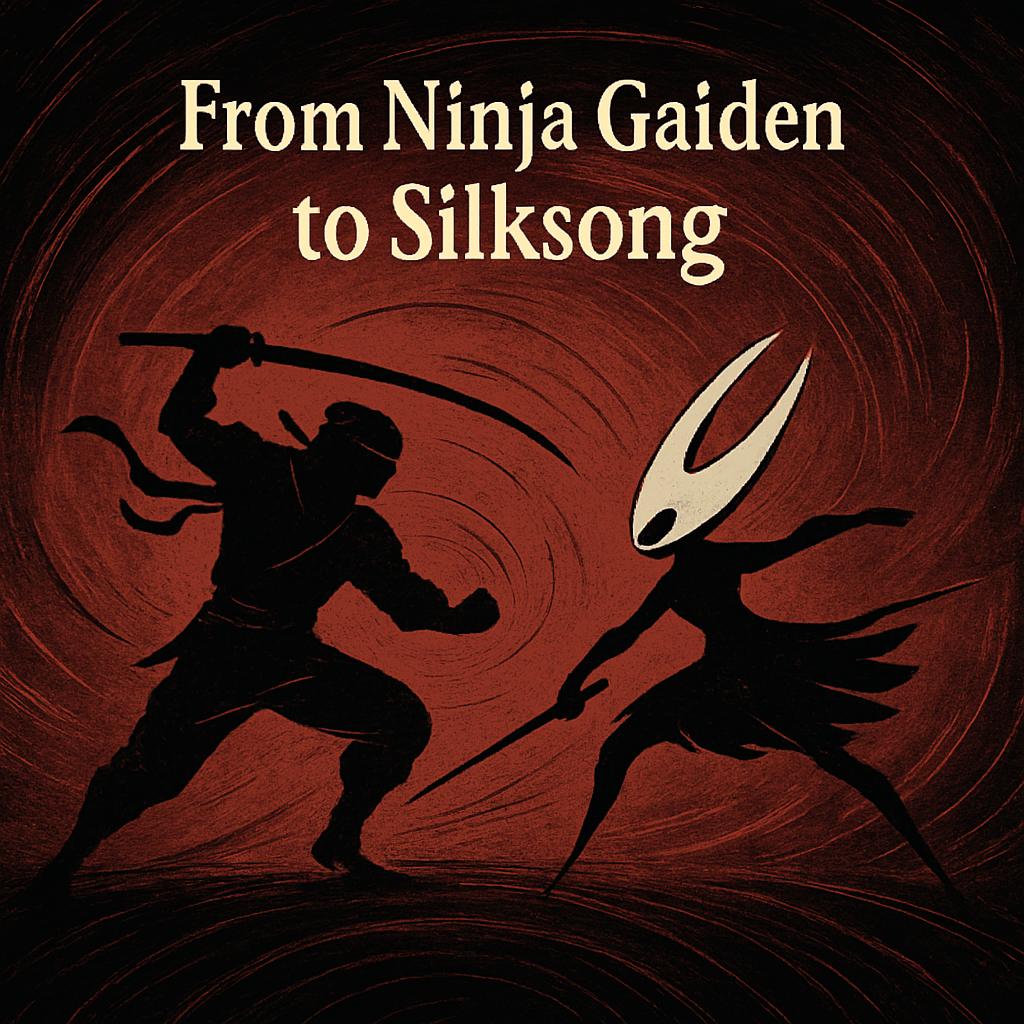
From Ninja Gaiden to Silksong: Why We Keep Coming Back to Hard Games

The internet is buzzing again. Scroll through YouTube or TikTok, and you’ll find countless clips of players cursing, laughing, or triumphantly fist-pumping their way through Hollow Knight: Silksong. The conversation circles back to one thing: it’s too hard.

I’ve been playing a lot of Silksong lately, and I can’t help but smile at the complaints. Yes, the game is tough. It punishes hesitation, demands precision, heck……sometimes it feels merciless, even petty. But to me, this isn’t a shock. It’s a reminder. A return to the way games used to be.

Back when I was a kid, difficulty wasn’t a talking point—it was simply the air we breathed. On the NES, games like Ninja Gaiden 3 didn’t give you gentle tutorials or generous checkpoints. They gave you three lives, enemies that respawned the moment you turned your back, and bosses that seemed designed to test your patience as much as your reflexes. Failure wasn’t optional—it was inevitable. And yet, we played. We tried again. We learned.

That’s why I find the controversy around Silksong fascinating. Players today often expect games to bend toward accessibility. Most modern titles are designed to guide you gently, to minimize frustration. They want you to see the ending, to feel accomplished without too many scars. But Silksong doesn’t coddle. Like its predecessor, it inherits the older philosophy of design: one that sees difficulty not as a wall, but as a staircase. You climb it one careful step at a time, and every slip only makes the summit sweeter.

Hard games about more than reflexes….they’re about rhythm. As a TikToker said, “every battle is a dance, every enemy your partner”. They teach you to observe patterns, to wait, to try something new when brute force doesn’t work. They demand patience, resilience, and the willingness to be humbled. That first boss who wipes the floor with you isn’t an insult: it’s an invitation. It says: you can do better, come back stronger….git gud!

When you finally do, when you land that perfect dodge, counter, or combo after dozens (or hundreds!!) of failures, there’s a satisfaction no easy victory can replicate….it’s about earning it. That feeling is rare, and it’s why we keep coming back.

For me, Silksong feels like a conversation with my younger self. Back then, frustration would push me to seethe in rage or want hurl a controller across the room. Now, older and perhaps a little wiser, I find the patience to sit with the difficulty or to step away and walk that 50th death off. I take breaks, rethink strategies, and even appreciate the elegance in the way the game tests me. Age hasn’t dulled the challenge—but it has changed the way I respond to it.

Maybe that’s why difficulty in games still matters. It mirrors life. Obstacles aren’t there just to block us, they shape us, help us get good if we dare face them. They remind us that persistence is part of the journey and that growth comes through trial. The victories we remember most are the ones we fought hardest for.

I suspect that’s why we keep coming back to hard games. Not because we like to suffer, but because we like to grow.

What about you? What was your hardest game growing up? How has it shaped the way you play today?

Strange Ideas from Classic Games: Unconventional Game Mechanics that Shaped the Industry

Embarking on a journey through the evolution of the video game industry reveals a captivating tale woven with strange and unconventional ideas. From the early days of pixelated adventures to the immersive virtual realms of today, the industry’s growth has been driven by game mechanics that dared to defy the norm.

To kick off this exploration, let’s delve into the unconventional mechanics that emerged in classic titles, shaping the gaming landscape we know today. These mechanics not only challenged the status quo during their time but also left an indelible mark, influencing future generations of game developers to think outside the box. So, buckle up as we traverse the realms of non-linear exploration, realistic character animations, and groundbreaking storytelling that have defined the very essence of gaming innovation.

Imagine a time when gaming was in its infancy, and developers were like pioneers, boldly venturing into uncharted territories. In the 1980s, titles such as The Legend of Zelda introduced the concept of non-linear exploration, dropping players into vast open worlds with minimal guidance. This departure from traditional linear structures laid the foundation for the open-world genre we cherish today. Concurrently, with its rotoscoped animations, Prince of Persia set a new standard for character realism, influencing the prioritization of lifelike movements in games and laying the groundwork for motion capture technology.

As we journey through this look-back, we will explore these peculiar game mechanics that emerged as early experiments, forever altering the course of gaming history. But our adventure doesn’t end there. We’ll traverse the realms of puzzle and strategy games, uncovering the innovative mechanics that captivated players and inspired future developers to push the boundaries of gameplay. As we dive deeper, we’ll unravel the fascinating tales of storytelling and player choice, witnessing how classics like Chrono Trigger and Deus Ex pioneered multiple endings, branching narratives, and immersive environmental storytelling.

Our exploration will also lead us to the action and adventure genre, where games like Half-Life and Metal Gear Solid introduced seamless narrative integration and stealth-based gameplay, revolutionizing their respective genres. Finally, we’ll reach the era of sandbox and emergent gameplay, where titles like Grand Theft Auto III and Minecraft redefined freedom in gaming, setting new standards for open-world exploration and creative expression.

So, join me on this journey as we uncover the peculiar and groundbreaking mechanics that have shaped the video game industry into the dynamic and diverse medium it is today.

Early experiments with unconventional mechanics

The 1980s marked a pivotal era in gaming where developers, akin to pioneers, embarked on bold experiments that would forever alter the industry’s trajectory. Let’s delve into these groundbreaking early mechanics that laid the foundation for the innovative gameplay features we now take for granted.

The Legend of Zelda (1986) – Non-linear Exploration

In 1986, Nintendo’s release of The Legend of Zelda shattered the mold of traditional action-adventure games. This iconic title introduced the concept of non-linear exploration, dropping players into a vast open world with minimal guidance. As gamers uncovered secrets, solved puzzles, and battled enemies at their own pace, a departure from linear level structures became evident. Little did we know this mechanic would evolve into a staple feature of contemporary open-world games.

Metroid (1986) – Gating Progress through Abilities

Another jewel from 1986, Metroid by Nintendo, transformed the way players approached in-game progression. The game introduced the idea of gating progress through the acquisition of new abilities. As players explored the mysterious planet of Zebes, discovering new powers became the key to accessing previously unreachable areas. This innovative design encouraged backtracking and exploration and laid the groundwork for the “Metroidvania” genre, a fusion of elements from the Metroid and Castlevania series.

Prince of Persia (1989) – Realistic Character Animations

In 1989, Jordan Mechner’s Prince of Persia elevated character animation to an unprecedented level of realism. Using a technique called rotoscoping, the protagonist’s movements were traced from a live actor, resulting in sprite-based animations that moved with unparalleled fluidity. This attention to detail in character animations became a standard-setter for the industry, inspiring developers to prioritize lifelike movements. We did not realize it at the time, but this innovation would pave the way for the motion capture technology we now see in modern games.

As we journey through these early experiments, we witness the birth of unconventional mechanics that not only challenged the norms of their time but also paved the way for the diverse and dynamic gaming experiences we enjoy today.

Unique mechanics in puzzle and strategy games

Puzzle and strategy games have long captivated players, and the classics within these genres introduced innovative mechanics that redefined possibilities. Join us as we explore these unconventional ideas that captivated players and inspired future developers to push the boundaries of gameplay.

Tetris (1984) – Infinite Puzzle Gameplay

In 1984, Alexey Pajitnov’s Tetris revolutionized the puzzle genre with its deceptively simple yet addictive gameplay. Players were tasked with fitting falling tetrominoes into horizontal lines, allowing for continuous play until the screen inevitably filled up. This infinite gameplay loop (now beaten), coupled with escalating difficulty levels, created a sense of tension and challenge that was groundbreaking at the time. Tetris went on to become one of the most successful and influential puzzle games in history, laying the foundation for countless variations and clones.

Lemmings (1991) – Manipulating AI-Controlled Characters

Developed by DMA Design (now Rockstar North), Lemmings introduced a unique mechanic that tasked players with guiding AI-controlled creatures to safety. Assigning specific roles to the lemmings, such as digging, building, or climbing, added a fresh layer to the puzzle genre. This indirect control of characters required players to think creatively and strategically to overcome obstacles. The success of Lemmings spawned sequels and inspired other games to experiment with AI-driven gameplay.

Populous (1989) – God Simulation and Terraforming

Bullfrog Productions’ Populous, designed by Peter Molyneux, is considered one of the first god simulation games, laying the foundation for the genre. Players assumed the role of a deity, shaping the landscape to grow their population and influence while competing against rival deities. The innovative terraforming mechanic, allowing players to raise and lower land, created a dynamic gameplay experience emphasizing strategy and careful planning. Populous‘ groundbreaking mechanics influenced numerous simulation and strategy games, including later titles by Molyneux himself, such as Black & White and the Fable series, all of which I experienced as soon as they came out.

Exploring new ways of storytelling and player choice

As the video game industry evolved, developers began experimenting with innovative ways to tell stories and immerse players in their game worlds. Several classic titles stand out for their groundbreaking approach to storytelling and the incorporation of player choice, paving the way for more complex and engaging narratives in modern games.

Chrono Trigger (1995) – Multiple Endings and Time Travel

Developed by Square (now Square Enix), Chrono Trigger was a trailblazer in the realm of storytelling, boasting a time-traveling narrative that spanned multiple eras and locations. What set it apart from other games at the time was its implementation of multiple endings, determined by the players’ actions and choices throughout the game. This branching narrative structure allowed for a high level of replayability, as players could explore different story paths and outcomes. Chrono Trigger‘s innovative approach to storytelling has since become a key influence on countless RPGs and narrative-driven games.

System Shock (1994) – Immersive Sim and Environmental Storytelling

Developed by Looking Glass Technologies, System Shock pioneered the immersive sim genre, combining elements of action, role-playing, and adventure games into a cohesive whole. Set in a dystopian cyberpunk universe, the game relied heavily on environmental storytelling. Players pieced together the narrative by exploring the game world, interacting with computer terminals, and discovering audio logs. This approach to storytelling was groundbreaking at the time and has since become a standard feature in many games, including successors like the BioShock and Deus Ex series and, even more recently, Starfield, among a plethora of games inspired by this now golden standard.

Deus Ex (2000) – Player Choice and Branching Narrative

Ion Storm’s Deus Ex took the concept of player choice and branching narratives to new heights. Set in a cyberpunk world filled with conspiracy theories and shadowy organizations, the game allowed players to make decisions that affected the story’s outcome and significantly impacted gameplay. Players could choose between different playstyles, such as stealth, combat, or diplomacy, and customize their character’s abilities to match their preferences. Deus Ex‘s emphasis on choice and consequence has had a lasting influence on the industry, inspiring a wave of games (Cyberpunk 2077 being a high culmination of this at the time of writing) that offer players a high level of agency in shaping their own narrative experiences.

Innovative mechanics in action and adventure games

Action and adventure games have long been a staple of the video game industry, and several classic titles broke new ground by introducing unique mechanics that set them apart from their contemporaries. These innovations not only made for more engaging gameplay experiences but also laid the groundwork for future games in the genre.

Half-Life (1998) – Seamless Narrative Integration

Developed by Valve, Half-Life revolutionized the first-person shooter genre by seamlessly integrating narrative and gameplay. Rather than relying on cutscenes to tell the story, Half-Life used scripted events and environmental storytelling to immerse players in the game world. This groundbreaking approach allowed players to experience the narrative at their own pace while maintaining a high level of immersion. Half-Life‘s influence can be seen in countless games that have followed, including its own sequels and other story-driven first-person shooters.

Metal Gear Solid (1998) – Stealth-Based Gameplay

Hideo Kojima’s Metal Gear Solid, developed by Konami, introduced stealth-based gameplay to the action-adventure genre. Players were encouraged to avoid confrontation and use cunning tactics to progress through the game, such as sneaking past enemies, hiding in cardboard boxes, or using gadgets to distract guards. This focus on stealth mechanics made Metal Gear Solid stand out from other action titles of the time and spawned an entire subgenre of stealth games, including the Hitman, Splinter Cell, and Dishonored series.

Ico (2001) – Escort Missions and Minimalistic Design

Developed by Team Ico, Ico was an action-adventure game that took a minimalist approach to both its gameplay and storytelling. The game centered around guiding a young girl named Yorda through a mysterious castle while protecting her from shadowy creatures. This innovative escort mission mechanic required players to rely on teamwork and cooperation with an AI-controlled character, creating a unique bond between the player and Yorda. Ico‘s minimalistic design also extended to its visual style, user interface, and storytelling, creating an atmospheric and immersive experience. The game has since become a cult classic and has inspired numerous titles, including its spiritual successor, Shadow of the Colossus, and other games that emphasize emotional connections between characters, like The Last Guardian and Brothers: A Tale of Two Sons.

The rise of sandbox and emergent gameplay

As technology advanced and game development became more sophisticated, developers began experimenting with sandbox and emergent gameplay mechanics. These types of games offered players unprecedented freedom and control, allowing them to shape their experiences in unique and creative ways.

Grand Theft Auto III (2001) – Open-World Freedom

Developed by Rockstar Games, Grand Theft Auto III was a groundbreaking title that popularized the open-world game genre. Set in a sprawling, fully realized city, players were free to explore the environment, engage in missions, or simply cause chaos at their leisure. This level of freedom and player choice, combined with a dynamic world that responded to player actions, set a new standard for open-world games. Grand Theft Auto III‘s influence can be seen in many open-world titles that followed, including subsequent entries in the series and other successful franchises like The Elder Scrolls, The Witcher, and Red Dead Redemption.

The Sims (2000) – Virtual Life Simulation

Created by Will Wright and developed by Maxis, The Sims introduced an entirely new genre to the gaming world: virtual life simulation. Players were free to create and control virtual characters, known as “Sims,” and shape their lives in a sandbox environment. From building and furnishing homes to developing relationships and pursuing careers, The Sims offered a level of depth and customization that was unprecedented at the time. The game’s success led to multiple sequels and spin-offs and inspired other popular life simulation games like Animal Crossing and Stardew Valley.

Minecraft (2011) – Procedurally Generated Worlds and Sandbox Creativity

Developed by Mojang, Minecraft took the gaming world by storm with its unique blend of procedurally generated worlds, sandbox gameplay, and near-limitless creative possibilities. Players could explore vast, randomly generated landscapes, gather resources, and build structures, all while facing off against various threats and challenges. Minecraft‘s open-ended nature allowed players to express themselves creatively, collaborate with others, and even create entirely new game modes and experiences within its framework. The immense popularity and influence of Minecraft have inspired countless sandbox games and user-generated content platforms, such as Roblox, Terraria, and No Man’s Sky.

Conclusion

Throughout the history of the video game industry, strange and unconventional ideas have often had the most significant impact on shaping the medium. From the early experiments with non-linear exploration and realistic character animations to the rise of sandbox and emergent gameplay, these groundbreaking mechanics have pushed the boundaries of what is possible in gaming and inspired countless developers to think outside the box.

In the realm of storytelling and player choice, games like Chrono Trigger, System Shock, and Deus Ex paved the way for more complex narratives, branching storylines, and immersive simulations. These titles engaged players and set standards for future RPGs and narrative-driven experiences. Action and adventure games witnessed innovations such as seamless narrative integration (Half-Life), stealth-based gameplay (Metal Gear Solid), and the unique escort mission mechanic with minimalistic design (Ico). These games captivated players with their gameplay mechanics and influenced entire genres. As technology advanced, sandbox and emergent gameplay took center stage with titles like Grand Theft Auto III, The Sims, and Minecraft. These games granted players unprecedented freedom and creativity, reshaping the gaming landscape and influencing a new generation of developers.

In reflecting on the strange ideas that have shaped the industry, it becomes evident that risk-taking and innovation are integral to the evolution of video games. The willingness to explore uncharted territory, experiment with unconventional mechanics, and challenge established norms has not only defined the past but continues to pave the way for the future of gaming. So, as we celebrate the diverse and dynamic world of video games, let’s appreciate the strange and unconventional ideas that have transformed this medium into the immersive and ever-evolving experience we know today. After all, it’s the willingness to embrace the peculiar and unexpected that keeps the video game industry at the forefront of innovation and creativity. Cheers to the strange ideas that have left an indelible mark on the gaming landscape!

The Power of Imagery in Contemporary Poetry

Contents

I. Introduction.

II. Contemporary Poets Who Use Imagery Effectively.

III. The Impact of Imagery on Readers.

IV. Pushing the Boundaries of Imagery in Contemporary Poetry.

V. Conclusion.

VI. References.

I. Introduction

Definition of Imagery in Poetry

Poetry often relies on vivid descriptions and sensory details to create an emotional connection with the reader. This is where imagery comes in. Imagery uses descriptive language and sensory details to create mental images and evoke emotions in the reader (Britannica, 2020).

Importance of Imagery in Creating Emotional Resonance and Atmosphere

In poetry, imagery is crucial in creating emotional resonance and atmosphere (eNotes Editorial, n.d.). It helps to transport the reader into the world of the poem. Moreover, it allows the poet to communicate complex ideas and emotions directly and effectively (Poetry Archive, n.d.).

Here we will explore the power of imagery in contemporary poetry and examine how contemporary poets use this technique to create powerful and memorable poems. We will also examine some contemporary poets who are masters of imagery, including Warsan Shire, Claudia Rankine, and Nayyirah Waheed. We plan to discuss the impact their use of imagery has had on their readers.

In addition, we will explore how imagery can be used to create powerful emotional effects, such as inducing empathy, fostering a sense of belonging, or communicating complex ideas.

In terms of conclusion, we will summarize the key takeaways. Finally, some suggestions will be offered to readers who wish to further explore the power of imagery in contemporary poetry.

II. Contemporary Poets Who Use Imagery Effectively

A. Warsan Shire

Brief Biography

Warsan Shire is a Somali-British poet and writer known for her powerful and evocative use of imagery. Born in Kenya in 1988 and raised in London, Shire’s poetry explores themes of identity, displacement, and the experiences of refugees and immigrants (British Council, n.d.).

Examples of Poems that Showcase Her Use of Imagery

Some of Shire’s most well-known poems, such as “For Women Who Are Difficult to Love” and “Home”, are prime examples of her use of vivid imagery to create powerful emotional effects. In these poems, Shire uses vivid descriptions and sensory details to draw out a sense of longing and convey complex emotions and experiences (Poetry Foundation, n.d.).

B. Claudia Rankine

Brief Biography

Claudia Rankine is a Jamaican-American poet, playwright, and essayist known for her innovative use of imagery. Rankine’s poetry explores themes of race, identity, and social justice, and her writing has been praised for its ability to create a powerful emotional connection with the reader (Britannica, 2023).

Examples of Poems that Showcase Her Use of Imagery

Some of Rankine’s most well-known poems, such as “Citizen” (add link) and “Don’t Let Me Be Lonely”, are prime examples of her use of imagery to create powerful emotional effects. In these poems, Rankine uses vivid descriptions and sensory details to explore the experiences of marginalized communities and convey complex emotions and ideas (Burt & Mikics, 2015).

C. Nayyirah Waheed

Brief Biography

Nayyirah Waheed is a self-taught poet and author who has gained a large following for her powerful and suggestive use of imagery. Born in Louisiana in 1984, Waheed’s poetry explores themes of love, identity, and the human experience. Her writing has been praised for its ability to connect with readers on a deep emotional level (Cassius Life Staff, 2019). As a very private and reclusive person, finding any photos of her has proven difficult.

Examples of Poems that Showcase Her Use of Imagery

Some of Waheed’s most well-known poems, such as “Salt.” and “Nejma”, are prime examples of her use of vivid imagery to create powerful emotional effects (Sparkes & Sparkes, 2014). In these poems, Waheed uses sensory details and descriptive language to explore complex emotions and experiences and to create a sense of intimacy and connection with the reader.

III. The Impact of Imagery on Readers

One of the key ways that imagery can impact readers is by eliciting an emotional response and fostering a sense of belonging. Imagery is a literary device that uses descriptive language and figures of speech to create a sensory experience or a picture with words for the reader. By using vivid descriptions and sensory details, writers can create a connection with their readers that goes beyond the words on the page. This can help readers feel seen and understood and develop a sense of community and shared experiences.

Imagery can also be used to communicate complex ideas and emotions in a direct and impactful way. By using sensory details and descriptive language, writers can convey complex concepts and experiences in a way that is accessible and memorable. This makes imagery an especially powerful tool for writers exploring complex or sensitive topics.

To demonstrate the impact of imagery on readers, examining specific examples of poems that use imagery effectively can be helpful. For instance, Warsan Shire’s poem “For Women Who Are Difficult to Love” uses vivid imagery to create a sense of empathy and understanding for women who are often misunderstood or rejected by their partners. She writes the following:

“you are terrifying and strange and beautiful something not everyone knows how to love.”

These lines create an image of a woman who is unique, powerful, vulnerable, and lonely. They also show how the speaker acknowledges her own worth despite the lack of appreciation from others.

Another example is Claudia Rankine’s poem “Citizen”(Need to add link), which uses imagery to explore complex themes of race and identity in America. She mentions:

“You are in the dark, in the car, watching the black-tarred street being swallowed by speed; he tells you his dean is making him hire a person of color when there are so many great writers out there.”

These lines create an image of a tense situation where the speaker is trapped in a car with someone who expresses racist views. They also show how the speaker feels isolated and alienated by the casual racism she encounters.

A third example is Nayyirah Waheed’s poem “Salt.” which uses imagery to create a sense of intimacy and connection with the reader. She writes:

“I don’t pay attention to the world ending. It has ended for me many times and began again in the morning.”

These lines create an image of resilience and hope in adversity. They also show how the speaker shares her personal experiences with the reader as if they were confidants.

By examining these and other examples, we can see how imagery can have a powerful impact on readers by creating sensory experiences, conveying complex ideas, eliciting an emotional response, inspiring compassion, building a sense of community, expressing emotions, exploring themes, communicating messages, etc.

IV. Pushing the Boundaries of Imagery in Contemporary Poetry

Innovations in Imagery in Contemporary Poetry

Contemporary poets are pushing the boundaries of what is possible with imagery in poetry. They use sensory details and descriptive language in new and innovative ways to create powerful, memorable poems. For example, some poets use imaging, a mode of imagination that shows greater affinity to visual representation than verbal expression, to convey complex ideas and emotions. Others use figurative language, such as metaphors, similes, personification, and symbols, to conjure a sensory experience in the reader and foster a sense of belonging (MasterClass, 2019). Contemporary poets constantly find new and exciting ways to use this technique by exploring new techniques and styles with imagery.

The Impact of These Innovations on the Wider Literary Landscape

These innovations in imagery are profoundly impacting the broader literary landscape. By creating new and exciting ways to use sensory details and descriptive language, contemporary poets inspire other writers and open up new avenues for exploration and experimentation in poetry. For example, some writers use observation as a catalyst for their creative process, taking one image from their surroundings and writing about it in depth, allowing it to spark other thoughts, memories, images, stories, and emotional weight (Zalipour, 2011). Additionally, these innovations are helping to broaden the appeal of poetry, making it more accessible and relevant to a broader audience. Whether you are a seasoned poet or just a lover of the written word, these innovations in imagery are sure to inspire and delight you.

V. Conclusion

We examined how contemporary poets use imagery to create powerful emotional effects and communicate complex ideas. Some poets who are masters of this technique are Warsan Shire, Claudia Rankine, and Nayyirah Waheed. Their use of imagery has captivated and inspired many readers around the world. If you want to learn more about imagery in contemporary poetry, check out these books and collections of poems by some of the poets we have mentioned in this post:

Bless the Daughter Raised by a Voice in Her Head by Warsan Shire:

Citizen: An American Lyric by Claudia Rankine:

Salt by Nayyirah Waheed:

Or better yet, try writing your own poems using imagery and share them with us! How do you feel about imagery in contemporary poetry? Do you have any favorite examples or poets that you would like to share? Let us know in the comments below!

VI. References

The Enchanting World of Codex Alera

Daily writing prompt
What book could you read over and over again?

Every once in a while, we come across a book or a series that captivates us so thoroughly that we find ourselves returning to it time and time again. For me, that series is the Codex Alera by Jim Butcher. Having discovered it in my teenage years, I have revisited this magical world multiple times, each experience offering new insights and fresh perspectives. In this blog post, I’ll share with you my love for the Codex Alera series, the enchanting world it inhabits, and the captivating characters that make it such a pleasure to read over and over.

A Magical World that Enchants

The world-building in the Codex Alera series is nothing short of phenomenal. Set in the fantastical realm of Alera, the story revolves around elemental spirits called furies, which can be harnessed by humans to wield incredible magical powers. The magic system is detailed and nuanced, with each person forming unique bonds with their elemental spirits, resulting in a wide range of abilities and effects.

An Unlikely Hero and His Journey

At the heart of the Codex Alera series is Tavi, a young man who initially seems powerless and insignificant in a world where almost everyone has magical abilities. Over the course of the series, Tavi grows into a brave, compassionate, and resourceful hero. I identified deeply with Tavi, as he faces adversity with courage and determination. His journey is a testament to the strength of character and the power of friendship, which has always resonated with me.

An Unlikely Bond

One of the most intriguing aspects of the Codex Alera series is the relationships that form between humans and the elemental spirits. Tavi, who is initially seen as an outsider due to his lack of a bond with a fury, eventually forges an unexpected connection with one of these beings, even though they were once considered enemies. This relationship is a beautiful exploration of love, trust, and understanding, as Tavi and his new companion learn to work together and overcome their differences.

Why I Keep Coming Back

The Codex Alera series has become a cherished part of my literary collection for many reasons. The magic system is rich and fascinating, the world-building immersive, and the characters are complex and relatable. But what truly sets it apart is the series’ exploration of the human spirit, the importance of friendship, and the power of love in the face of adversity.

In Conclusion….If you haven’t had the chance to delve into the captivating world of the Codex Alera series, I highly recommend giving it a try. I cannot say more in order to avoid spoiling it for newcomers. For me, it’s a book series that I could – and have – read over and over again, each time finding new aspects to appreciate and savor. Whether you’re revisiting it for the first time or the tenth, the Codex Alera series promises an enchanting and unforgettable journey.

The Power of Imagination

What’s a secret skill or ability you have or wish you had?

In dreams I wander through the fields of time,

Where skills and talents rest like fruits to pluck.

I reach for gifts that, plucked, would make me shine,

And weave a life with threads of fate and luck.

||

If tongues of nations rested on my lips,

Their secrets whispered softly in my ear,

The world would open, as a flower slips

From bud to bloom, and distant lands draw near.

||

Or if my fingers danced on strings and keys,

Creating melodies to soothe and mend,

Would not the world then sway with gentle ease,

As harmony and peace around us blend?

||

Yet dreams awaken in the heart of hope,

And in pursuit, new skills and joys shall cope.