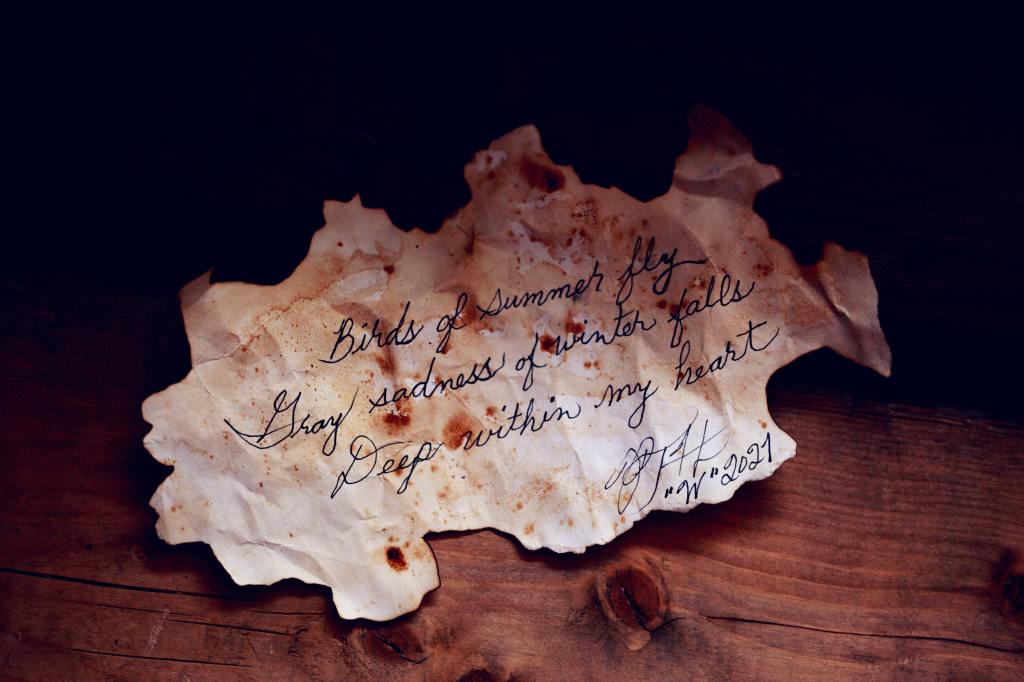
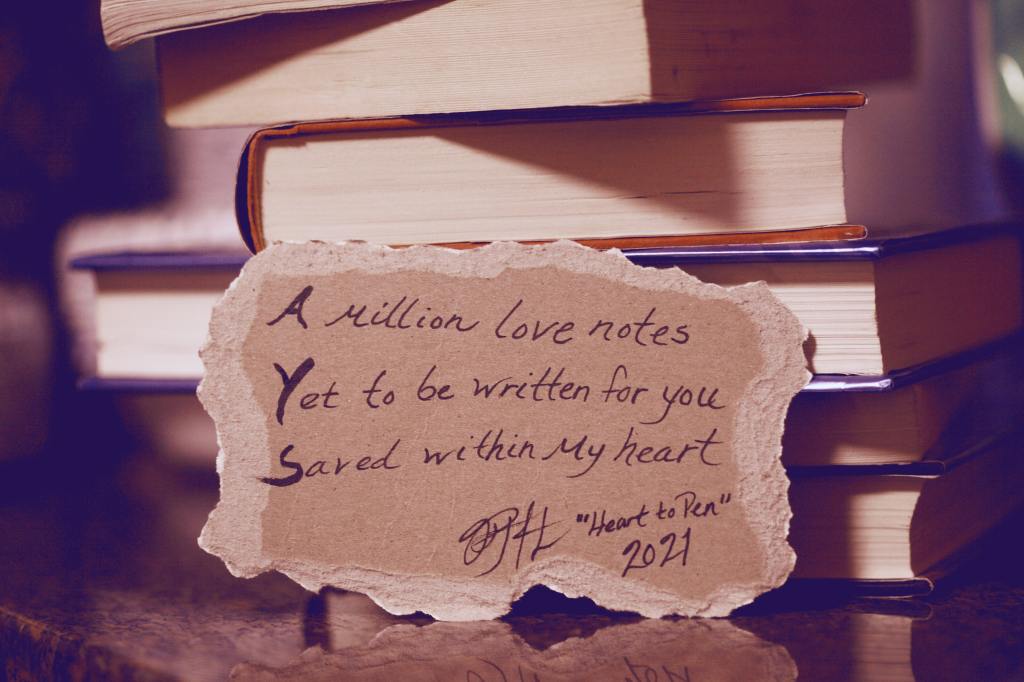
A Tragic, Yet Beautiful, Truth 

Mended in light… it endures.

Prelude: The Soul Awakens

Truth is as absolute as it is subjective. The reality of our convictions may lead us toward certain choices, but even as we make those choices, we often know deep inside when we are lying to others… and to ourselves. The truth can hurt, and in our delusion, we may want to defy it. The truth can heal…if we accept it, if we accept the pain that comes with it to face the other side. And no matter what we may want, reality is what it is. “See things as they are and not as we want them to be,” to somewhat quote Renoir and Verso from Clair Obscur: Expedition 33

Most people, non-followers especially, who stumble upon this opinion post already know about the game, and as such, you all know that it is, in truth, a work of art. It is so painfully European at its core, or rather, very non-American. It is an echo of the past we so adore, a modern transformation of classical tragedy into the most popular medium of our era. The premise of the game is a very meta outlook on art. The protagonists, members of the Dessendre family, are Painters; their art is alive, it lives on its own, and in being alive, it carries the soul of those who painted it. 

In this sense, it truly resonated with me. I was moved by how, much like what I have written in the past, be it poems, prose, or ramblings, the art of Clair Obscur takes on an independence of its own, becoming more than what the Painter initially created. Often, I have felt that for us, the creators, poems are like living things too… just like a child is its own being, though it came from you. I have often gone back to read what I wrote years later and found myself surprised by my own writing. The words are the same, sure, but they feel… different. Are they truly mine? Did I write them? Those words feel like a world of their own, going on without me. And through them, maybe I will live on. It is in this same sense that Verso lives, though he died. A part of him lives on…literally…as the canvas he painted lives on.


Creation as Soulwork

And so, Painters and the enigmatic Writers from the world of Clair Obscur are the artists and poets of our world. I will not tire of repeating it: they pour pieces of their soul into their creations… and those creations live on. And in doing so, we are not forgotten. How long has it been since Da Vinci died? Since Corneille? And yet, we speak their names still. We recite their words, admire their art. They live on. 

Verso lives on inside the Painted World in more ways than one. There is hope that I, as a writer, will also live on within my art. The world depicted in Clair Obscur goes through extremes permitted by the liberalities of artistic vision. Aline recreating Verso as a version similar to the outside world is an exaggeration that may never come to pass. But it is meant to be symbolic of how our families, a mother, needs her loved ones to live on, to give herself hope. Aline used this method to deal with her grief, losing her son, and the resulting shattering of their family. What happened to cause this? It is still a mystery that may, perhaps, be solved in another story within that universe. 

If there is tension between Writers and Painters, I feel that there should instead be harmony. As a writer myself, I feel an echo of what the Painters have done. I suppose the Writers in that world hold the same power in a different form. Sometimes, the word or the art simply wants OUT. We express, if only in different ways. Our expression relieves us. We are free of the burden within us. In my own small pieces, I express what I feel, what I cannot say nor publish sometimes. In some way, the unsaid must be expressed, in whatever form. The art is made not for the entertainment of others, but for our own release. 

This is where Clair Obscur most triumphs. It is clear (to anyone who plays, and even to those who do not play but at least take time to listen to the 33-minute musical piece “Nos Vies en Lumière”) this was a glorious expression of multiple forms of art. It was not made to check investor boxes. It was not made to cater to the whims of executive management. It was simply put out into the world because they could…because they wanted to. And it is the better for it.


The Tragic Heart of the Game

If I had to boil it down to just three emotional moments…three moments that shattered me, even more than the grand finale…they would be: 

a. Gustave’s death 
b. The fight and farewell to Renoir 
c. The demise of the Paintress 

I’ll say it clearly: I saw the end coming. The grand finale didn’t surprise me. But these three did. 

The first, and most jarring, was the death of Gustave. Or rather, the annihilation of Gustave. I, like many, assumed he was our protagonist. JRPG convention, after all, tells us that the first character we control is the main character. Gustave had charm, depth, flaws, and strength. And then, he was utterly erased. It reminded me of the first time someone watched Game of Thrones without reading the books: Ned Stark’s execution. That moment when your brain realizes, “Oh. All bets are off.” That’s what happened with Gustave. That’s when I knew this wasn’t a “safe” story. 

It’s also when I knew this game was unmistakably European. 

Western, particularly American, storytelling tends to protect its protagonists. The hero overcomes, wins, defies fate. But in European tragedy, fate is rarely kind. The small man does not win. The child does not always grow up. Sometimes, the innocent fall, and that is that. It is bitter, it is human, and it is true. Tragedy is the most probable outcome. Even in the fantastical Painted World, this harsh principle holds. 

Renoir’s final battle and his painted echo’s fall hit me next. This man, the real one, wants to end his wife’s grief by destroying the Painted World. But the Renoir we fight is also Renoir…his essence, his longing to keep the family whole. His painted self becomes Aline’s protector, even as the real Renoir fights to save what’s left outside. This inner conflict, this mirroring of desire and pain, broke me. Renoir vs. Renoir. Love versus love. A tragic symmetry. 

Then there’s Aline, the Paintress. Her final moment is more than about loss, but it is about surrender. She built the Painted World to keep her son alive, to keep herself alive in his presence. She is fragile and fierce. She is terrible and tender. She has become the world’s soul, and in leaving it, she is undone. Her grief was the brush; her son, the canvas. And when she falls, a kind of silence settles. 

Americans might call all this drama. But no…this is Tragédie. Real, aching, brutal tragedy. And that’s what makes it beautiful.


Poetry and the Painted World

The Painters built with color. I build with words. But both are mirrors for what the heart cannot say aloud. 

Mirrors don’t show everything though… 

Sometimes they shimmer and blur. 

They hold back what would blind us if we saw it whole. 

We keep writing and painting, hoping to catch a glimpes of what hides behind the surface of reality, within us and without. 

“In Clair Obscur, the Painters pour their souls into color until the canvas itself becomes alive. I sometimes wonder if writers do the same with language. If every metaphor, every unfinished line, is a tiny echo of us trying to stay. 

Just like the Painters, what we write brings life to a world that we experience through our mind’s eye. In some cases, it can be so distinctive and precise that we all see the same feel the emotions with the same intensity. One great example is what Peter Jackson did with the Lord of The Rings. Tolkien did a great job, so much so that when I saw the movies, it was as if Jackson read my mind and brought to life all that I imagined in almost the same way I saw it. 

Personally, writing is an exhaust for my soul. I write my loneliness, my sadness, and even my secret love. Through writing as through painting or any form of art for that matter, we create a space that carries what cannot be said aloud. Love, anger, longing, despair, truth. 

This is where poetry comes in as a potent medium for expression of the unspeakable. A Haiku is a great example of this, expression condensed into a pure supernova of meaning like the densest stars. 

Like a dying star, the Haiku is weight and fire compressed into a single instant. Only the essence remains at it burns away everything unnecessary. An entire landscape, or whole paragraphs…in 17 syllables. 

Brevity can wound…. A few syllables, and suddenly you’re holding the universe in your palm. 

That is why I keep writing, here or there, and even in my mind where whole drafts drift into the ether once written. 

Every poem,  

every line,  

is a way to make peace with what refuses to be forgotten.


In Spite of Everything

We refuse to let silence or void have the last word. 

In every act of creation there is a quiet, yet fierce, defiance. The world turns, it does not need beauty or pain to keep turning. Still we never stop offering it, could our small gestures convince time to be kind? The answer does not matter. 

In spite of everything, we create. Creation helps us to survive ourselves. It will not or may not save us…but we will live on.  

Verso poured his time and soul into his canvas. Even after his unfortunate demise, he lives on within. His art persists, along with a piece of him. It never fades, and this is why his mother Aline could not let go. Like us, she cannot escape the darkness, hence she chose to reshape it by recreating her family inside of Verso’s world.  

We do not throw our pain away, our joys, they are part of us and we endure.  

Like in kintsugi we rebuild…where it sticks the pieces back together with golden seams, we mend what’s broken with light. 

We celebrate who we’ve become and we define ourselves through this expression in our art. 

In spite of everything, we shine on. Our light is fragile, but it is eternal. Made more beautiful by the darkness within which it blooms…


Epilogue: Forward Glance

The light, soft and patient, lives beside the dark. 

Because in the end, I don’t think we truly ever conquer grief. 
We learn to walk with it… 
to let it illuminate what remains. 

Nos vies en lumière… our lives in light… 
Less like an ending, 
more a gentle afterimage. 

We may vanish, 
but our echoes paint the sky. 

Every act of creation leaves a trace, faint yet enduring. 
The Painters poured their souls into color; 
we pour ours into words, melodies, gestures. 
When the hand that shaped them is gone, 
something still moves within the work … 
a shimmer, a breath. 

Perhaps that is how we live on: 
not in permanence, but in persistence, 
like light bending around absence. 

Aline knew this. 
She tried to hold her son inside the painted world, 
not out of madness but memory. 
In doing so, she built a monument 
to what love cannot surrender. 

There’s something sacred in that desperation… 
the refusal to let beauty die 
simply because the body that made it has fallen silent. 

Maybe all art is a form of reaching back… 
an open hand extended across the blur of time.

Mirrors, poems, and brushstrokes … 
they all reflect a little of the same light. 
Each tries to remember what reality forgets. 
We mend ourselves with color and sound, 
we rebuild with gold and grief. 

Even the cracks, once filled, catch the sun differently. 
That’s why the broken things gleam. 

The music of Clair Obscur lingers in my head… 
that final theme, Nos vies en lumière. 
It feels like forgiveness sung into being. 
Not triumph, not closure, 
but a quiet continuation. 

The kind of melody that hums beneath your breathing 
long after the speakers go silent. 

Maybe that’s what it means to live in light: 
to become resonance. 
To accept that our stories will fade, 
but the feeling they leave… 
the tenderness, the awe… 
will echo in someone else. 

We may vanish, yes… 
but our echoes paint the sky.
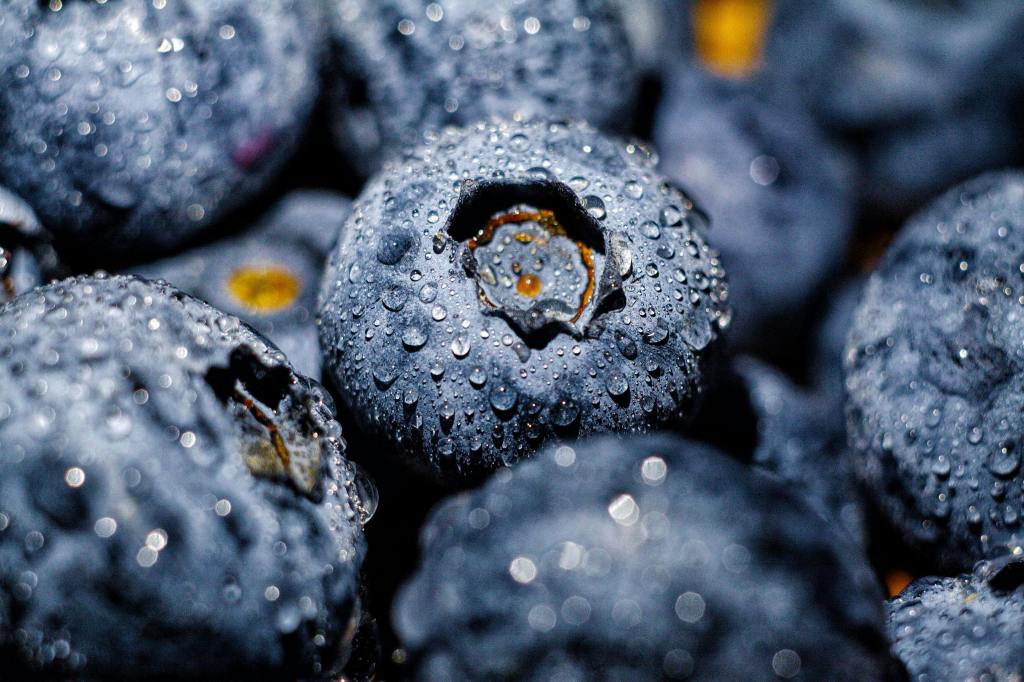
Plump Freshness

Photo by Dina Nasyrova (Pexels)

Beauty hides in simple moments — a glimmer, a taste, a thought that lingers.

A haiku for that feeling of freshness that never quite fades.


Plump freshness flourish
Breez’ over mind and body
Thirst never sated


Sometimes inspiration hits mid-scroll — or mid-crush.

This was s tiny haiku born from a fleeting moment and a passing breeze.

The Power of Imagery in Contemporary Poetry

Contents

I. Introduction.

II. Contemporary Poets Who Use Imagery Effectively.

III. The Impact of Imagery on Readers.

IV. Pushing the Boundaries of Imagery in Contemporary Poetry.

V. Conclusion.

VI. References.

I. Introduction

Definition of Imagery in Poetry

Poetry often relies on vivid descriptions and sensory details to create an emotional connection with the reader. This is where imagery comes in. Imagery uses descriptive language and sensory details to create mental images and evoke emotions in the reader (Britannica, 2020).

Importance of Imagery in Creating Emotional Resonance and Atmosphere

In poetry, imagery is crucial in creating emotional resonance and atmosphere (eNotes Editorial, n.d.). It helps to transport the reader into the world of the poem. Moreover, it allows the poet to communicate complex ideas and emotions directly and effectively (Poetry Archive, n.d.).

Here we will explore the power of imagery in contemporary poetry and examine how contemporary poets use this technique to create powerful and memorable poems. We will also examine some contemporary poets who are masters of imagery, including Warsan Shire, Claudia Rankine, and Nayyirah Waheed. We plan to discuss the impact their use of imagery has had on their readers.

In addition, we will explore how imagery can be used to create powerful emotional effects, such as inducing empathy, fostering a sense of belonging, or communicating complex ideas.

In terms of conclusion, we will summarize the key takeaways. Finally, some suggestions will be offered to readers who wish to further explore the power of imagery in contemporary poetry.

II. Contemporary Poets Who Use Imagery Effectively

A. Warsan Shire

Brief Biography

Warsan Shire is a Somali-British poet and writer known for her powerful and evocative use of imagery. Born in Kenya in 1988 and raised in London, Shire’s poetry explores themes of identity, displacement, and the experiences of refugees and immigrants (British Council, n.d.).

Examples of Poems that Showcase Her Use of Imagery

Some of Shire’s most well-known poems, such as “For Women Who Are Difficult to Love” and “Home”, are prime examples of her use of vivid imagery to create powerful emotional effects. In these poems, Shire uses vivid descriptions and sensory details to draw out a sense of longing and convey complex emotions and experiences (Poetry Foundation, n.d.).

B. Claudia Rankine

Brief Biography

Claudia Rankine is a Jamaican-American poet, playwright, and essayist known for her innovative use of imagery. Rankine’s poetry explores themes of race, identity, and social justice, and her writing has been praised for its ability to create a powerful emotional connection with the reader (Britannica, 2023).

Examples of Poems that Showcase Her Use of Imagery

Some of Rankine’s most well-known poems, such as “Citizen” (add link) and “Don’t Let Me Be Lonely”, are prime examples of her use of imagery to create powerful emotional effects. In these poems, Rankine uses vivid descriptions and sensory details to explore the experiences of marginalized communities and convey complex emotions and ideas (Burt & Mikics, 2015).

C. Nayyirah Waheed

Brief Biography

Nayyirah Waheed is a self-taught poet and author who has gained a large following for her powerful and suggestive use of imagery. Born in Louisiana in 1984, Waheed’s poetry explores themes of love, identity, and the human experience. Her writing has been praised for its ability to connect with readers on a deep emotional level (Cassius Life Staff, 2019). As a very private and reclusive person, finding any photos of her has proven difficult.

Examples of Poems that Showcase Her Use of Imagery

Some of Waheed’s most well-known poems, such as “Salt.” and “Nejma”, are prime examples of her use of vivid imagery to create powerful emotional effects (Sparkes & Sparkes, 2014). In these poems, Waheed uses sensory details and descriptive language to explore complex emotions and experiences and to create a sense of intimacy and connection with the reader.

III. The Impact of Imagery on Readers

One of the key ways that imagery can impact readers is by eliciting an emotional response and fostering a sense of belonging. Imagery is a literary device that uses descriptive language and figures of speech to create a sensory experience or a picture with words for the reader. By using vivid descriptions and sensory details, writers can create a connection with their readers that goes beyond the words on the page. This can help readers feel seen and understood and develop a sense of community and shared experiences.

Imagery can also be used to communicate complex ideas and emotions in a direct and impactful way. By using sensory details and descriptive language, writers can convey complex concepts and experiences in a way that is accessible and memorable. This makes imagery an especially powerful tool for writers exploring complex or sensitive topics.

To demonstrate the impact of imagery on readers, examining specific examples of poems that use imagery effectively can be helpful. For instance, Warsan Shire’s poem “For Women Who Are Difficult to Love” uses vivid imagery to create a sense of empathy and understanding for women who are often misunderstood or rejected by their partners. She writes the following:

“you are terrifying and strange and beautiful something not everyone knows how to love.”

These lines create an image of a woman who is unique, powerful, vulnerable, and lonely. They also show how the speaker acknowledges her own worth despite the lack of appreciation from others.

Another example is Claudia Rankine’s poem “Citizen”(Need to add link), which uses imagery to explore complex themes of race and identity in America. She mentions:

“You are in the dark, in the car, watching the black-tarred street being swallowed by speed; he tells you his dean is making him hire a person of color when there are so many great writers out there.”

These lines create an image of a tense situation where the speaker is trapped in a car with someone who expresses racist views. They also show how the speaker feels isolated and alienated by the casual racism she encounters.

A third example is Nayyirah Waheed’s poem “Salt.” which uses imagery to create a sense of intimacy and connection with the reader. She writes:

“I don’t pay attention to the world ending. It has ended for me many times and began again in the morning.”

These lines create an image of resilience and hope in adversity. They also show how the speaker shares her personal experiences with the reader as if they were confidants.

By examining these and other examples, we can see how imagery can have a powerful impact on readers by creating sensory experiences, conveying complex ideas, eliciting an emotional response, inspiring compassion, building a sense of community, expressing emotions, exploring themes, communicating messages, etc.

IV. Pushing the Boundaries of Imagery in Contemporary Poetry

Innovations in Imagery in Contemporary Poetry

Contemporary poets are pushing the boundaries of what is possible with imagery in poetry. They use sensory details and descriptive language in new and innovative ways to create powerful, memorable poems. For example, some poets use imaging, a mode of imagination that shows greater affinity to visual representation than verbal expression, to convey complex ideas and emotions. Others use figurative language, such as metaphors, similes, personification, and symbols, to conjure a sensory experience in the reader and foster a sense of belonging (MasterClass, 2019). Contemporary poets constantly find new and exciting ways to use this technique by exploring new techniques and styles with imagery.

The Impact of These Innovations on the Wider Literary Landscape

These innovations in imagery are profoundly impacting the broader literary landscape. By creating new and exciting ways to use sensory details and descriptive language, contemporary poets inspire other writers and open up new avenues for exploration and experimentation in poetry. For example, some writers use observation as a catalyst for their creative process, taking one image from their surroundings and writing about it in depth, allowing it to spark other thoughts, memories, images, stories, and emotional weight (Zalipour, 2011). Additionally, these innovations are helping to broaden the appeal of poetry, making it more accessible and relevant to a broader audience. Whether you are a seasoned poet or just a lover of the written word, these innovations in imagery are sure to inspire and delight you.

V. Conclusion

We examined how contemporary poets use imagery to create powerful emotional effects and communicate complex ideas. Some poets who are masters of this technique are Warsan Shire, Claudia Rankine, and Nayyirah Waheed. Their use of imagery has captivated and inspired many readers around the world. If you want to learn more about imagery in contemporary poetry, check out these books and collections of poems by some of the poets we have mentioned in this post:

Bless the Daughter Raised by a Voice in Her Head by Warsan Shire:

Citizen: An American Lyric by Claudia Rankine:

Salt by Nayyirah Waheed:

Or better yet, try writing your own poems using imagery and share them with us! How do you feel about imagery in contemporary poetry? Do you have any favorite examples or poets that you would like to share? Let us know in the comments below!

VI. References

The Power of Imagination

What’s a secret skill or ability you have or wish you had?

In dreams I wander through the fields of time,

Where skills and talents rest like fruits to pluck.

I reach for gifts that, plucked, would make me shine,

And weave a life with threads of fate and luck.

||

If tongues of nations rested on my lips,

Their secrets whispered softly in my ear,

The world would open, as a flower slips

From bud to bloom, and distant lands draw near.

||

Or if my fingers danced on strings and keys,

Creating melodies to soothe and mend,

Would not the world then sway with gentle ease,

As harmony and peace around us blend?

||

Yet dreams awaken in the heart of hope,

And in pursuit, new skills and joys shall cope.

A Boy’s Journey for Love

Up 20 miles of winding road,

A boy traveled with a heavy load.

His heart was set on just one thing,

To see the girl who made his heart sing.

The journey up was long and tough,

But he knew it would be worth enough.

For at the top, he’d finally see

The girl who held his destiny.

With each step, his heart beat fast,

Anticipating the moment at last.

And when he saw her standing there,

He knew that love was in the air.

Their eyes met, and time stood still,

As they moved in for a kiss to fulfill

The longing that had brought him here,

And erased all doubt and fear.

But as they parted, reality hit hard,

For he knew he had to journey back afar.

Downhill he went with a lighter heart,

Filled with memories that would never depart.

Though the journey back was easier still,

His mind was racing with thoughts until

He reached home safe and sound,

With love so true, forever bound.

A Poetic Ode to the Bold and Cheesy Cheese Curls

I love me some cheese curls. I haven’t had any in quite a while and this morning my wife brought some home! While munching I thought “these deserve recognition!”. And silly as it may sound, here is my poem celebrating this delightful junk food!!

Cheese curls, oh so bright and bold,

Crunchy, cheesy, a joy to behold.

With their neon hue and twisted shape,

They make my taste buds come awake.

A salty tang that hits the tongue,

A crunch that echoes, a chorus sung.

A snack that’s perfect for any time,

From lunchtime break to midnight rhyme.

They’re the perfect partner for movie night,

Or for a snack on a lazy afternoon delight.

And when the craving hits me hard,

I’ll reach for the bag, oh so unmarred.

So here’s to cheese curls, oh so fine,

A snack that’s truly divine.

They may not be the healthiest treat,

But their taste can’t be beat.

Why Would I EVEN Tell You?

Have you ever broken the law and didn’t get caught, if so how?

Why would I reveal such a tale,

Of breaking the law, without fail,

If caught, the price to pay is high,

A risk too great to justify.

~~~~~~~~~~~~~~~~~~~~~~~~~

So let my secrets rest in peace,

For lawless acts must surely cease,

And while I may have slipped the net,

To speak of it, I can’t forget.

~~~~~~~~~~~~~~~~~~~~~~~~~

So let this be a lesson learned,

For any lawless act discerned,

The safest way is to abstain,

And avoid a life of shame and pain.

Raised with Love: To My Parents and Grandmother

What were your parents doing at your age?

At my age, my mother held the reins,

With my sister and me, she felt the pains.

My father lived apart, but still he cared,

Visiting us often, love he shared.

Both worked hard, to give us all they could,

Their love for us, pure, strong, and good.

My grandmother was a blessing, that’s for sure,

Supporting my mother, her love did endure.

Together they raised us, with grace and might,

Preparing us for the future, guiding us with sight.

Their lives they lived, with love and care,

Making sure we’d be ready, when they’re not there.

So here’s to my parents, and my grandmother too,

Their love and guidance, always shines through.

Forever grateful, for all they’ve done,

Their love and support, second to none.

RENGA

Renga is a traditional Japanese collaborative poetry form that was the precursor to haiku. It is a long chain poem composed of alternating three-line and two-line stanzas, with a strict syllable count for each line. The first stanza, called the hokku, sets the scene and mood for the poem, and later stanzas build on and develop the themes and images introduced in the hokku.

Renga was a popular form of poetry in Japan during the Edo period (1603-1868) and was often composed by groups of poets who would take turns adding stanzas to the poem. The subject matter of renga could range from nature and the seasons, to love, politics, and spirituality.

Over time, the hokku became more popular on its own and evolved into what we now recognize as haiku, which typically consists of just the first three lines of a renga. Haiku, however, is typically focused more narrowly on nature, whereas renga can encompass a broader range of subjects.

Renga is less widely known or practiced today than haiku, but it remains a fascinating and challenging form of poetry that can be both entertaining and thought-provoking. Whether composing a renga with a group of friends or exploring it as an individual poet, renga is a unique and interesting form of collaborative poetry.

Discovering the Beauty and Simplicity of Haiku: A Guide for Beginners

Haiku is a traditional form of Japanese poetry that has gained worldwide popularity for its simplicity and elegance. It consists of just three lines, with a strict syllable pattern of 5-7-5 syllables per line. Despite its small size, a haiku can convey powerful emotions, deep thoughts, and vivid images.

Photo by Yuma Kim

Haiku originated in Japan in the 17th century as a part of the “hokku”, which was the opening verse of a collaborative poetry form called “renga”. Over time, the hokku became more popular on its own and evolved into what we now recognize as haiku. The first recognized haiku poet was Matsuo Basho, who lived in the late 1600s and is considered one of the greatest haiku poets of all time.

Haiku traditionally focuses on nature, capturing a moment in time and a sense of the seasons. The best haikus evoke a clear image or feeling and often use sensory details, such as sights, sounds, or smells, to create a connection between the reader and the subject of the poem. The final line of a haiku often includes a “cutting word” that provides a sudden turn or shift in thought, adding depth to the poem.

Photo and Haiku by Poppy Thomas Hill

In its traditional form, haiku is written in Japanese, using seasonal references and a strict syllable pattern. However, modern haiku has evolved and expanded to include poems written in other languages and subjects beyond nature. Some contemporary haiku poets may also play with the syllable pattern, using fewer or more syllables per line.

Haiku has gained popularity around the world as a form of poetry that is easy to write and appreciate. Many people enjoy writing haikus as a form of self-expression and as a way to connect with nature and their own emotions. Haiku has also been used as a tool for meditation, mindfulness, and stress relief.

Haiku continues to evolve and adapt, with new forms and styles emerging all the time. However, its core elements remain the same: a focus on nature, a strict syllable pattern, and a desire to capture a moment in time and evoke a strong emotional response.

Photo and Haiku by Poppy Thomas Hill

In conclusion, a haiku is a form of Japanese poetry that has stood the test of time and continues to be popular and relevant today. Its simplicity and elegance make it accessible to poets and readers of all levels, while its focus on nature and the emotions it evokes make it a powerful tool for self-expression and mindfulness. Whether you are a seasoned poet or someone just looking to try your hand at writing, haiku is a wonderful form of poetry to explore. Stay tuned for a short overview of “Renga” coming soon on this blog!