The slow crawl back to consciousness from a dream so vivid, so tangibly present, that the line between sleeping and waking blurs. A moment where you hesitate, just long enough, to ask yourself whether what you experienced might actually have happened.
Dreams have a way of doing that. They don’t announce themselves as fiction. They feel inhabited.
Two films understand this better than most.
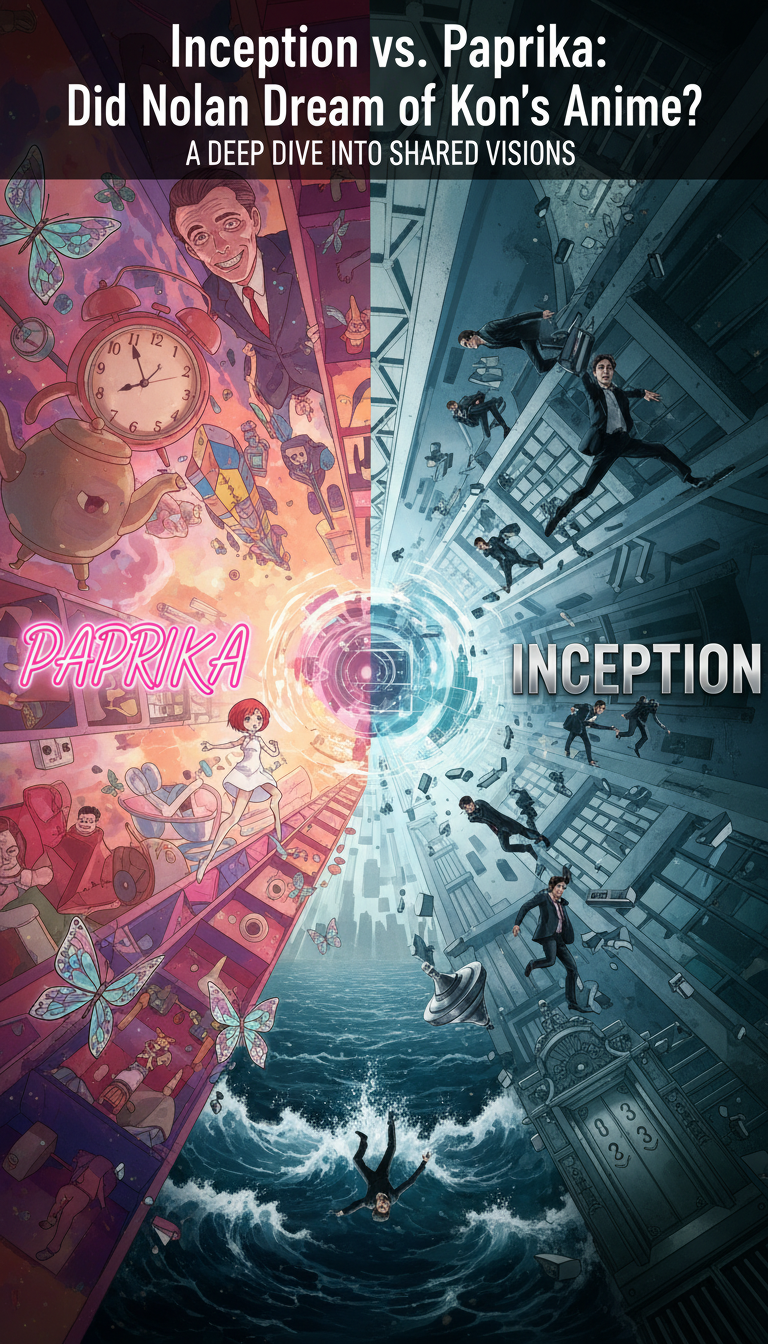
Christopher Nolan’s Inception (2010). Satoshi Kon’s Paprika (2006).
For a while, cinephiles have circled the same question: are the similarities between these films coincidence—or influence? Did one dream quietly echo inside the other?
Two Architects of the Subconscious
Both films explore the same terrain: the human mind as a landscape you can enter, manipulate, and lose yourself in. But they do so with radically different sensibilities.
Paprika
Kon’s world is fluid, surreal, and unapologetically unstable. Reality melts. Scenes fold into one another with dream logic: doors open into parades, reflections speak back, gravity is optional.
Dreams here are not puzzles to be solved. They are forces to be survived.
Inception
Nolan’s approach is colder, more architectural. Dreams are layered, mapped, engineered. Every level has rules. Every illusion is constructed with intent.
This is not a dream you wander into. It’s a heist you plan.
One film treats dreams as rivers. The other treats them as buildings.
A Question of Timing
At first glance, the timeline complicates accusations of imitation.
Paprika was released in 2006. But Nolan has stated that the core idea for Inception had been forming as early as 2000.
Both filmmakers were responding to the same cultural moment: rapid advances in technology, growing interest in neuroscience, and a renewed fascination with the unconscious. Instead of travelling in straight lines, sometimes ideas emerge simultaneously, like shared dreams across different minds.
Visual Echoes That Refuse to Be Ignored
And yet.
Certain moments are hard to dismiss.
The hallway. Paprika glides through gravity-defying corridors. Arthur fights in one.
The elevator. Kon uses it to descend through layers of the psyche. Nolan uses it to confront repressed guilt.
The shattering world. Reality fractures like glass in both films: revealing that what we stand on was never solid to begin with.
The kick. A fall. A jolt. A violent return to waking.
Coincidence? Perhaps. But dreams have a habit of repeating themselves.
The Debate No One Can Settle
There are, broadly speaking, three camps.
“Kon Was Robbed.”
The similarities are too precise. The silence too loud. The timing too cruel—especially given Kon’s death the same year Inception was released.
“Nolan Built It Himself.”
Ideas overlap. Genres differ. One is a surreal psychological fantasy; the other, a meticulously structured blockbuster.
“The Creative Zeitgeist.”
Some ideas are simply in the air. Artists draw from the same unconscious pool without ever meeting.
None of these positions are fully satisfying. Which may be the point.
Two Dreams, One Legacy
Regardless of origin, together, they changed how we visualize thought itself.
Paprika proved that animation could explore psychological depth without restraint…unbound by physical laws.
Inception proved that complex, idea-driven science fiction could captivate a global audience without apology.
They stand not as rivals, but as reflections, mirrors angled differently toward the same mystery.
Dreams don’t belong to anyone. They pass through us.
Which Dream Will You Enter?
Did Christopher Nolan consciously draw inspiration from Satoshi Kon?
There may never be a definitive answer. Creative processes rarely leave fingerprints. They leave atmospheres.
What is certain is this: both films invite us to question the solidity of our inner worlds. Both ask us to sit with uncertainty. Both remind us that the mind is not a safe place…but it is a fascinating one.
Watch them again. Let them blur. And decide for yourself which dream feels more real.
Truth is as absolute as it is subjective. The reality of our convictions may lead us toward certain choices, but even as we make those choices, we often know deep inside when we are lying to others… and to ourselves. The truth can hurt, and in our delusion, we may want to defy it. The truth can heal…if we accept it, if we accept the pain that comes with it to face the other side. And no matter what we may want, reality is what it is. “See things as they are and not as we want them to be,” to somewhat quote Renoir and Verso from Clair Obscur: Expedition 33.
Most people, non-followers especially, who stumble upon this opinion post already know about the game, and as such, you all know that it is, in truth, a work of art. It is so painfully European at its core, or rather, very non-American. It is an echo of the past we so adore, a modern transformation of classical tragedy into the most popular medium of our era. The premise of the game is a very meta outlook on art. The protagonists, members of the Dessendre family, are Painters; their art is alive, it lives on its own, and in being alive, it carries the soul of those who painted it.
In this sense, it truly resonated with me. I was moved by how, much like what I have written in the past, be it poems, prose, or ramblings, the art of Clair Obscur takes on an independence of its own, becoming more than what the Painter initially created. Often, I have felt that for us, the creators, poems are like living things too… just like a child is its own being, though it came from you. I have often gone back to read what I wrote years later and found myself surprised by my own writing. The words are the same, sure, but they feel… different. Are they truly mine? Did I write them? Those words feel like a world of their own, going on without me. And through them, maybe I will live on. It is in this same sense that Verso lives, though he died. A part of him lives on…literally…as the canvas he painted lives on.
Creation as Soulwork
And so, Painters and the enigmatic Writers from the world of Clair Obscur are the artists and poets of our world. I will not tire of repeating it: they pour pieces of their soul into their creations… and those creations live on. And in doing so, we are not forgotten. How long has it been since Da Vinci died? Since Corneille? And yet, we speak their names still. We recite their words, admire their art. They live on.
Verso lives on inside the Painted World in more ways than one. There is hope that I, as a writer, will also live on within my art. The world depicted in Clair Obscur goes through extremes permitted by the liberalities of artistic vision. Aline recreating Verso as a version similar to the outside world is an exaggeration that may never come to pass. But it is meant to be symbolic of how our families, a mother, needs her loved ones to live on, to give herself hope. Aline used this method to deal with her grief, losing her son, and the resulting shattering of their family. What happened to cause this? It is still a mystery that may, perhaps, be solved in another story within that universe.
If there is tension between Writers and Painters, I feel that there should instead be harmony. As a writer myself, I feel an echo of what the Painters have done. I suppose the Writers in that world hold the same power in a different form. Sometimes, the word or the art simply wants OUT. We express, if only in different ways. Our expression relieves us. We are free of the burden within us. In my own small pieces, I express what I feel, what I cannot say nor publish sometimes. In some way, the unsaid must be expressed, in whatever form. The art is made not for the entertainment of others, but for our own release.
This is where Clair Obscur most triumphs. It is clear (to anyone who plays, and even to those who do not play but at least take time to listen to the 33-minute musical piece “Nos Vies en Lumière”) this was a glorious expression of multiple forms of art. It was not made to check investor boxes. It was not made to cater to the whims of executive management. It was simply put out into the world because they could…because they wanted to. And it is the better for it.
The Tragic Heart of the Game
If I had to boil it down to just three emotional moments…three moments that shattered me, even more than the grand finale…they would be:
a. Gustave’s death b. The fight and farewell to Renoir c. The demise of the Paintress
I’ll say it clearly: I saw the end coming. The grand finale didn’t surprise me. But these three did.
The first, and most jarring, was the death of Gustave. Or rather, the annihilation of Gustave. I, like many, assumed he was our protagonist. JRPG convention, after all, tells us that the first character we control is the main character. Gustave had charm, depth, flaws, and strength. And then, he was utterly erased. It reminded me of the first time someone watched Game of Thrones without reading the books: Ned Stark’s execution. That moment when your brain realizes, “Oh. All bets are off.” That’s what happened with Gustave. That’s when I knew this wasn’t a “safe” story.
It’s also when I knew this game was unmistakably European.
Western, particularly American, storytelling tends to protect its protagonists. The hero overcomes, wins, defies fate. But in European tragedy, fate is rarely kind. The small man does not win. The child does not always grow up. Sometimes, the innocent fall, and that is that. It is bitter, it is human, and it is true. Tragedy is the most probable outcome. Even in the fantastical Painted World, this harsh principle holds.
Renoir’s final battle and his painted echo’s fall hit me next. This man, the real one, wants to end his wife’s grief by destroying the Painted World. But the Renoir we fight is also Renoir…his essence, his longing to keep the family whole. His painted self becomes Aline’s protector, even as the real Renoir fights to save what’s left outside. This inner conflict, this mirroring of desire and pain, broke me. Renoir vs. Renoir. Love versus love. A tragic symmetry.
Then there’s Aline, the Paintress. Her final moment is more than about loss, but it is about surrender. She built the Painted World to keep her son alive, to keep herself alive in his presence. She is fragile and fierce. She is terrible and tender. She has become the world’s soul, and in leaving it, she is undone. Her grief was the brush; her son, the canvas. And when she falls, a kind of silence settles.
Americans might call all this drama. But no…this is Tragédie. Real, aching, brutal tragedy. And that’s what makes it beautiful.
Poetry and the Painted World
The Painters built with color. I build with words. But both are mirrors for what the heart cannot say aloud.
Mirrors don’t show everything though…
Sometimes they shimmer and blur.
They hold back what would blind us if we saw it whole.
We keep writing and painting, hoping to catch a glimpes of what hides behind the surface of reality, within us and without.
“In Clair Obscur, the Painters pour their souls into color until the canvas itself becomes alive. I sometimes wonder if writers do the same with language. If every metaphor, every unfinished line, is a tiny echo of us trying to stay.
Just like the Painters, what we write brings life to a world that we experience through our mind’s eye. In some cases, it can be so distinctive and precise that we all see the same feel the emotions with the same intensity. One great example is what Peter Jackson did with the Lord of The Rings. Tolkien did a great job, so much so that when I saw the movies, it was as if Jackson read my mind and brought to life all that I imagined in almost the same way I saw it.
Personally, writing is an exhaust for my soul. I write my loneliness, my sadness, and even my secret love. Through writing as through painting or any form of art for that matter, we create a space that carries what cannot be said aloud. Love, anger, longing, despair, truth.
This is where poetry comes in as a potent medium for expression of the unspeakable. A Haiku is a great example of this, expression condensed into a pure supernova of meaning like the densest stars.
Like a dying star, the Haiku is weight and fire compressed into a single instant. Only the essence remains at it burns away everything unnecessary. An entire landscape, or whole paragraphs…in 17 syllables.
Brevity can wound…. A few syllables, and suddenly you’re holding the universe in your palm.
That is why I keep writing, here or there, and even in my mind where whole drafts drift into the ether once written.
Every poem,
every line,
is a way to make peace with what refuses to be forgotten.
In Spite of Everything
We refuse to let silence or void have the last word.
In every act of creation there is a quiet, yet fierce, defiance. The world turns, it does not need beauty or pain to keep turning. Still we never stop offering it, could our small gestures convince time to be kind? The answer does not matter.
In spite of everything, we create. Creation helps us to survive ourselves. It will not or may not save us…but we will live on.
Verso poured his time and soul into his canvas. Even after his unfortunate demise, he lives on within. His art persists, along with a piece of him. It never fades, and this is why his mother Aline could not let go. Like us, she cannot escape the darkness, hence she chose to reshape it by recreating her family inside of Verso’s world.
We do not throw our pain away, our joys, they are part of us and we endure.
Like in kintsugi we rebuild…where it sticks the pieces back together with golden seams, we mend what’s broken with light.
We celebrate who we’ve become and we define ourselves through this expression in our art.
In spite of everything, we shine on. Our light is fragile, but it is eternal. Made more beautiful by the darkness within which it blooms…
Epilogue: Forward Glance
The light, soft and patient, lives beside the dark.
Because in the end, I don’t think we truly ever conquer grief. We learn to walk with it… to let it illuminate what remains.
Nos vies en lumière… our lives in light… Less like an ending, more a gentle afterimage.
We may vanish, but our echoes paint the sky.
Every act of creation leaves a trace, faint yet enduring. The Painters poured their souls into color; we pour ours into words, melodies, gestures. When the hand that shaped them is gone, something still moves within the work … a shimmer, a breath.
Perhaps that is how we live on: not in permanence, but in persistence, like light bending around absence.
Aline knew this. She tried to hold her son inside the painted world, not out of madness but memory. In doing so, she built a monument to what love cannot surrender.
There’s something sacred in that desperation… the refusal to let beauty die simply because the body that made it has fallen silent.
Maybe all art is a form of reaching back… an open hand extended across the blur of time.
Mirrors, poems, and brushstrokes … they all reflect a little of the same light. Each tries to remember what reality forgets. We mend ourselves with color and sound, we rebuild with gold and grief.
Even the cracks, once filled, catch the sun differently. That’s why the broken things gleam.
The music of Clair Obscur lingers in my head… that final theme, Nos vies en lumière. It feels like forgiveness sung into being. Not triumph, not closure, but a quiet continuation.
The kind of melody that hums beneath your breathing long after the speakers go silent.
Maybe that’s what it means to live in light: to become resonance. To accept that our stories will fade, but the feeling they leave… the tenderness, the awe… will echo in someone else.
Two invasions. Two betrayals. Only one left a scar.
For years, comic book fans whispered two words with both hope and dread… Secret Invasion.
The 2008 storyline was a sprawling, paranoid epic that changed everything. It asked one simple, terrifying question: Who do you trust?
So when Marvel Studios finally announced a Disney+ adaptation, it felt like destiny. This was the one that could shake the foundations of the MCU… the one that could bring back that sense of unease and cosmic paranoia that comics had captured so well.
But when Secret Invasion arrived, it felt curiously quiet. Less like a universe-shattering event, more like a muted spy thriller uncertain of its own identity.
It’s not that the show lacked potential. The bones were there — Nick Fury facing his own moral exhaustion, shapeshifters testing the meaning of identity, a planet teetering on the edge of distrust. But something essential was missing. The story that once made readers question every mask and every hero ended up feeling strangely contained… flat, even.
Its threat was supposed to be cosmic. Its impact felt small.
The Problem: A Contained Invasion
The failure of Secret Invasion isn’t about premise — it’s about scale… or rather, the refusal to feel large.
In the comics, the invasion wasn’t just another crossover. It was an existential crisis that rewrote the very idea of trust. Years of slow storytelling paid off in creeping paranoia — that awful sense that anyone could be an impostor. The shock of each reveal hit because it carried history: Elektra. Spider-Woman. Hank Pym.
The betrayals weren’t clever. They were personal.
The Disney+ version couldn’t touch that. With only six episodes, it became a Nick Fury side story orbiting a single tired man. In the process, it erased the rest of the universe from its own apocalypse. What should have felt like a storm across every corner of the MCU instead felt like a drizzle in one small town.
Even its emotional stakes were muted. “Who do you trust?” means nothing if the audience doesn’t already know the people being distrusted. Secret Invasion filled its paranoia with strangers.
The betrayals didn’t sting because… well… we never really cared.
And when it was all over, there was no ripple. No whisper of consequence. No unease carried forward. The invasion came and went — a narrative detour that left no scar.
It took the name of an epic and turned it into a shrug.
The Missing Ingredient? Tone
Part of the problem runs deeper. It’s a tone issue.
Secret Invasion wanted to be two things at once — a cold espionage thriller and a cosmic invasion story. It tried to whisper and roar at the same time, and in the end, did neither.
A spy story thrives on silence… on what’s not said, on tension between people who know each other too well. A cosmic invasion thrives on awe — on scale and spectacle, on the unbearable size of the threat.
Secret Invasion floated uneasily in between. It was an invasion that felt too quiet, and a spy story that felt too loud.
The Blueprint: The Patient Fall of S.H.I.E.L.D.
To see how it could have worked, you only need to look back to 2014… to Captain America: The Winter Soldier and the fall of S.H.I.E.L.D.
That film delivered one of the most shocking twists in blockbuster history — the revelation that Hydra, long thought defeated, had been hiding within S.H.I.E.L.D. all along.
It wasn’t just a plot twist. It was a narrative earthquake.
But the genius of that moment didn’t exist in isolation. It echoed outward. The shockwave didn’t stop at the theater door. It carried into Agents of S.H.I.E.L.D. — a series that suddenly found itself living through the aftermath of its own destruction.
The movie provided the explosion. The show lived through the fallout.
Patient Build-Up
For sixteen episodes, Agents of S.H.I.E.L.D. was a slow burn. It built a world, a team, and a sense of belonging. We came to trust these characters… their camaraderie, their loyalty, their mission.
Then, overnight, everything changed.
When The Winter Soldier revealed Hydra’s infiltration, the series didn’t just reference it — it absorbed it. The very next episode, Turn, Turn, Turn, detonated the twist at ground level. Suddenly the institution these agents had devoted their lives to was rotten to its core.
And then came the gut punch — Grant Ward, one of the core heroes, was Hydra.
That moment wasn’t about ideology or espionage… it was betrayal. It was heartbreak.
Cinematic Shock, Human Consequence
The synergy between The Winter Soldier and Agents of S.H.I.E.L.D. remains one of the MCU’s rare strokes of brilliance. The film gave us the spectacle — the collapsing helicarriers, the moral fractures, the ideological war.
The series gave us the human cost.
It lingered in the confusion, the loss, the debris of trust. The lighting dimmed, dialogue slowed, the tone itself fractured. Everything — even the rhythm of speech — shifted to match a world reeling from betrayal.
That’s what real synergy does. It doesn’t just reference another story. It carries the emotional weight forward, lets it evolve.
Hydra didn’t just happen to the MCU. It moved through it. It infected the bloodstream.
Long-Term Consequence
The fall of S.H.I.E.L.D. could have been a one-off shock. But it wasn’t. It became the pulse of the story for years.
The characters had to rebuild from nothing, working in shadows, haunted by the institution they once trusted. Ward’s betrayal became the emotional spine of the series. Every alliance, every mission, every glance carried that ghost of doubt.
And crucially, it wasn’t just about what happened. It was about what remained.
That’s what Secret Invasion missed — aftermath.
Synergy Is the Secret Ingredient
The Hydra arc remains Marvel’s best example of how film and television can work together instead of apart.
The movie gave us the rupture. The series explored the aftershock.
Each medium played to its strength: film offered the scope, television offered the intimacy. Together, they created a single living organism — not a brand, but a story ecosystem.
Secret Invasion never tried to do that. It isolated itself, pretending that a “contained” story would somehow feel more grounded. But isolation made it smaller. It asked us to believe in a global threat while also believing that no other hero would even notice.
Hydra, meanwhile, infected everything… and everyone. The paranoia was earned. The consequences were visible. The scars lasted.
That’s the difference. A living universe doesn’t just react to events. It feels them.
The Lesson
There’s a trend in modern blockbusters — a rush toward the twist rather than the consequence. Surprise is mistaken for substance.
But The Winter Soldier and Agents of S.H.I.E.L.D. understood something fundamental: a twist is only as good as the life it creates afterward. A reveal should open doors, not close them.
Secret Invasion asked the question: Who do you trust? Hydra answered it… painfully, and completely.
When Hydra’s truth came out, we felt it. We watched it destroy lives, careers, friendships. Trust itself became a casualty.
Secret Invasion, on the other hand, asked the same question but never lived in its answer. It flirted with paranoia but never let us sit in it. It told us the world had changed — then acted as if it hadn’t.
What Endures
The Hydra storyline worked because it wasn’t just about infiltration. It was about identity.
It took something familiar and made it alien. It made us doubt the world we thought we knew. And then it forced its characters — and us — to rebuild meaning from the wreckage.
That’s what grand storytelling does. It doesn’t end with spectacle. It lingers. It leaves scars.
As superhero fatigue deepens, maybe what audiences crave isn’t another multiverse or shocking cameo. Maybe what we want is consequence — stories that remember what the aftermath feels like.
Because in the end, it’s not the explosion that defines a universe… It’s what survives the smoke.
(A Protoform Alpha Reflection) A reflection on silence, overstimulation, and the quiet we keep forgetting. 🕊️ Written over quiet mornings in early October 2025.
The Volume of Thought
Lately, I’ve been thinking about how much silence we’ve lost. Every thought now arrives with a soundtrack — a playlist, a notification, a feed of other people thinking. Even clarity has become noisy. We talk about mindfulness while scrolling, analyze art before it breathes, and fill every empty moment with commentary. Somewhere between the podcasts, the think pieces, and the endless background hum, we started mistaking stimulation for understanding.
I’ve begun to notice how difficult it has become to think in quiet. To sit still with a question long enough for it to echo back something new. Silence has grown foreign, even suspicious — as though if we’re not producing, commenting, reacting, we might cease to exist.
But there was a time when silence wasn’t absence. It was presence. It was possibility.
We live in a world that rewards noise disguised as thought. Every platform teaches us to announce our clarity — to package it, to defend it, to monetize it. We call this “sharing” or “authenticity,” but much of it is performance. We present our certainty like a shield, because admitting confusion feels like failure in an era that demands instant conclusions.
Clarity has become a kind of armor. And like all armor, it dulls sensation.
Even our creative impulses bend under this demand. Artists are expected to explain their work before it’s even finished. Writers summarize their ideas before they’re written. Musicians preface their songs with content warnings, interviews, “reaction-friendly” explanations. Thought is consumed in real-time — not when it’s ripe, but when it’s trending.
The paradox is that the more we strive for clarity, the less of it we actually find. We trade the slow texture of reflection for the smooth instant of comprehension. We want to get it — quickly, cleanly, before moving on. But meaning doesn’t always emerge at the speed of a scroll. Some things need silence to breathe.
It’s strange to realize that we now live inside an unending commentary track. Every film, every song, every book spawns an immediate ecosystem of explanations — essays, breakdowns, think pieces, reactions. Before we even encounter a work of art, we’ve already seen it dissected and ranked. The moment of discovery — that private, electric silence between the viewer and the thing — is gone.
Even our emotions have hashtags now. We are encouraged to narrate our joy, our grief, our outrage. And while expression is valuable, constant expression erodes intimacy. The private becomes public, the uncertain becomes a headline.
We no longer sit with feelings; we process them into statements.
I think often of how it feels to listen to music without doing anything else — not while writing, not while cleaning, not as background to another task, but just listening. It’s almost disorienting at first, like stepping into a room where the air feels too still. You start to hear things — faint breaths, subtle notes, the sound between sounds.
That’s where understanding lives. Not in the noise of clarity, but in the quiet that follows it.
When I write, I sometimes feel the hum of a thousand invisible eyes — imagined readers, expectations, invisible judgment. It’s not censorship, not exactly. It’s the quiet anxiety of exposure. The need to already know what a thing will mean before I’ve even let it mean anything.
Maybe that’s what overstimulation does: it confuses the echo for the voice. We begin to write, speak, or paint for the anticipated response instead of the real impulse.
Games have taught me this, too. There’s something meditative about a long, difficult boss fight in Hollow Knight or Silksong — the rhythm of failure and retry, the silence of focus, the internal dialogue that only happens when the external world disappears. The dance of battle. That kind of engagement is becoming rare: deep, private, demanding.
Art once asked for immersion; now it competes for attention.
We’ve built systems that reward reaction over reflection, speed over stillness. Somewhere in the static, the clarity we chase becomes just another layer of noise.
False Illumination
The irony is that we believe ourselves to be more enlightened than ever. We have instant access to data, perspectives, expert takes. We call this awareness. But awareness without depth is its own illusion.
Information is not wisdom. Connection is not communion. Clarity is not peace.
We read faster, know sooner, conclude quicker. But what we gain in immediacy, we lose in intimacy. Our relationship to knowledge has become transactional. We no longer absorb ideas — we consume them. We scroll through epiphanies like headlines, forgetting that real understanding is not a download but a slow unfolding.
The digital world has given us infinite mirrors, but very few windows. We see reflections everywhere, yet rarely see through them.
Attention, once sacred, is now currency. Every platform fights to capture it, algorithms optimizing not for truth but for retention. And the tragedy is that we’ve learned to value our attention only when it’s being spent.
Stillness feels like waste. Silence feels unproductive.
But art — real art, the kind that lingers — does not come from perpetual motion. It comes from pause. From the quiet friction between what we think we know and what we still feel uncertain about.
When you look at a painting long enough, there’s a point where interpretation gives way to communion. You stop trying to “understand” and start to sense. The brushstrokes become breathing. The image stares back. That’s where meaning hides — not in clarity, but in contact.
Reclaiming the Quiet
Sometimes I imagine what would happen if we collectively stopped trying to define everything. If we allowed a work of art, or a person, or a moment to remain mysterious. To not name it. To not dissect it. To not rush it toward conclusion.
Maybe clarity isn’t something we achieve but something we remember. The quiet knowing that existed before words — the one we’ve drowned under all our explanations.
I think of poets who let silence do half the work. Of painters who leave canvas exposed, trusting the eye to fill what the brush did not. Of conversations that linger not because of what was said, but because of what was felt in the pauses.
There’s power in restraint. In letting meaning hum beneath the surface rather than hammering it into place.
I’ve started experimenting with silence again. Sometimes, I’ll write with no music, no background noise, just the sound of the keys, the scratch of the pen and the quiet space between thoughts. At first, it feels uncomfortable, like detoxing from brightness. The mind reaches for noise like a hand searching for a phone that’s no longer there. Eventually, the stillness expands.
It’s strange how, once you stop trying to think so loudly, thoughts become clearer. They arrive slowly, but with more depth. They ask questions instead of giving answers.
Maybe that’s what real clarity sounds like — not a voice shouting truth, but a whisper asking you to listen.
I keep returning to this paradox: that the search for clarity has made us more confused. That in naming every shadow, we’ve forgotten how to see in dim light.
But there’s a gentleness in surrendering the need to know. A liberation in saying, “I don’t have the answer yet — and maybe I never will.”
Because clarity, when it’s genuine, is quiet. It’s not a conclusion but a space. A breath before the next thought. A stillness that doesn’t need to prove itself.
The Quiet After
Clarity doesn’t need to sound like revelation. It sounds like nothing at all.
It’s the quiet after the last note fades. The blank page after a sentence you don’t need to finish. The hush before the mind rushes in again to fill the gap. If there is wisdom in this age of noise, maybe it begins there: in the silence we no longer trust, but still remember.
Written over quiet mornings in early October 2025. For those who crave a little silence between the scrolls.
Embarking on a journey through the evolution of the video game industry reveals a captivating tale woven with strange and unconventional ideas. From the early days of pixelated adventures to the immersive virtual realms of today, the industry’s growth has been driven by game mechanics that dared to defy the norm.
To kick off this exploration, let’s delve into the unconventional mechanics that emerged in classic titles, shaping the gaming landscape we know today. These mechanics not only challenged the status quo during their time but also left an indelible mark, influencing future generations of game developers to think outside the box. So, buckle up as we traverse the realms of non-linear exploration, realistic character animations, and groundbreaking storytelling that have defined the very essence of gaming innovation.
Imagine a time when gaming was in its infancy, and developers were like pioneers, boldly venturing into uncharted territories. In the 1980s, titles such as The Legend of Zelda introduced the concept of non-linear exploration, dropping players into vast open worlds with minimal guidance. This departure from traditional linear structures laid the foundation for the open-world genre we cherish today. Concurrently, with its rotoscoped animations, Prince of Persia set a new standard for character realism, influencing the prioritization of lifelike movements in games and laying the groundwork for motion capture technology.
As we journey through this look-back, we will explore these peculiar game mechanics that emerged as early experiments, forever altering the course of gaming history. But our adventure doesn’t end there. We’ll traverse the realms of puzzle and strategy games, uncovering the innovative mechanics that captivated players and inspired future developers to push the boundaries of gameplay. As we dive deeper, we’ll unravel the fascinating tales of storytelling and player choice, witnessing how classics like Chrono Trigger and Deus Ex pioneered multiple endings, branching narratives, and immersive environmental storytelling.
Our exploration will also lead us to the action and adventure genre, where games like Half-Life and Metal Gear Solid introduced seamless narrative integration and stealth-based gameplay, revolutionizing their respective genres. Finally, we’ll reach the era of sandbox and emergent gameplay, where titles like Grand Theft Auto III and Minecraft redefined freedom in gaming, setting new standards for open-world exploration and creative expression.
So, join me on this journey as we uncover the peculiar and groundbreaking mechanics that have shaped the video game industry into the dynamic and diverse medium it is today.
Early experiments with unconventional mechanics
The 1980s marked a pivotal era in gaming where developers, akin to pioneers, embarked on bold experiments that would forever alter the industry’s trajectory. Let’s delve into these groundbreaking early mechanics that laid the foundation for the innovative gameplay features we now take for granted.
The Legend of Zelda (1986) – Non-linear Exploration
In 1986, Nintendo’s release of The Legend of Zelda shattered the mold of traditional action-adventure games. This iconic title introduced the concept of non-linear exploration, dropping players into a vast open world with minimal guidance. As gamers uncovered secrets, solved puzzles, and battled enemies at their own pace, a departure from linear level structures became evident. Little did we know this mechanic would evolve into a staple feature of contemporary open-world games.
Metroid (1986) – Gating Progress through Abilities
Another jewel from 1986, Metroid by Nintendo, transformed the way players approached in-game progression. The game introduced the idea of gating progress through the acquisition of new abilities. As players explored the mysterious planet of Zebes, discovering new powers became the key to accessing previously unreachable areas. This innovative design encouraged backtracking and exploration and laid the groundwork for the “Metroidvania” genre, a fusion of elements from the Metroid and Castlevania series.
Prince of Persia (1989) – Realistic Character Animations
In 1989, Jordan Mechner’s Prince of Persia elevated character animation to an unprecedented level of realism. Using a technique called rotoscoping, the protagonist’s movements were traced from a live actor, resulting in sprite-based animations that moved with unparalleled fluidity. This attention to detail in character animations became a standard-setter for the industry, inspiring developers to prioritize lifelike movements. We did not realize it at the time, but this innovation would pave the way for the motion capture technology we now see in modern games.
As we journey through these early experiments, we witness the birth of unconventional mechanics that not only challenged the norms of their time but also paved the way for the diverse and dynamic gaming experiences we enjoy today.
Unique mechanics in puzzle and strategy games
Puzzle and strategy games have long captivated players, and the classics within these genres introduced innovative mechanics that redefined possibilities. Join us as we explore these unconventional ideas that captivated players and inspired future developers to push the boundaries of gameplay.
Tetris (1984) – Infinite Puzzle Gameplay
In 1984, Alexey Pajitnov’s Tetris revolutionized the puzzle genre with its deceptively simple yet addictive gameplay. Players were tasked with fitting falling tetrominoes into horizontal lines, allowing for continuous play until the screen inevitably filled up. This infinite gameplay loop (now beaten), coupled with escalating difficulty levels, created a sense of tension and challenge that was groundbreaking at the time. Tetris went on to become one of the most successful and influential puzzle games in history, laying the foundation for countless variations and clones.
Developed by DMA Design (now Rockstar North), Lemmings introduced a unique mechanic that tasked players with guiding AI-controlled creatures to safety. Assigning specific roles to the lemmings, such as digging, building, or climbing, added a fresh layer to the puzzle genre. This indirect control of characters required players to think creatively and strategically to overcome obstacles. The success of Lemmings spawned sequels and inspired other games to experiment with AI-driven gameplay.
Populous (1989) – God Simulation and Terraforming
Bullfrog Productions’ Populous, designed by Peter Molyneux, is considered one of the first god simulation games, laying the foundation for the genre. Players assumed the role of a deity, shaping the landscape to grow their population and influence while competing against rival deities. The innovative terraforming mechanic, allowing players to raise and lower land, created a dynamic gameplay experience emphasizing strategy and careful planning. Populous‘ groundbreaking mechanics influenced numerous simulation and strategy games, including later titles by Molyneux himself, such as Black & White and the Fable series, all of which I experienced as soon as they came out.
Exploring new ways of storytelling and player choice
As the video game industry evolved, developers began experimenting with innovative ways to tell stories and immerse players in their game worlds. Several classic titles stand out for their groundbreaking approach to storytelling and the incorporation of player choice, paving the way for more complex and engaging narratives in modern games.
Chrono Trigger (1995) – Multiple Endings and Time Travel
Developed by Square (now Square Enix), Chrono Trigger was a trailblazer in the realm of storytelling, boasting a time-traveling narrative that spanned multiple eras and locations. What set it apart from other games at the time was its implementation of multiple endings, determined by the players’ actions and choices throughout the game. This branching narrative structure allowed for a high level of replayability, as players could explore different story paths and outcomes. Chrono Trigger‘s innovative approach to storytelling has since become a key influence on countless RPGs and narrative-driven games.
System Shock (1994) – Immersive Sim and Environmental Storytelling
Developed by Looking Glass Technologies, System Shock pioneered the immersive sim genre, combining elements of action, role-playing, and adventure games into a cohesive whole. Set in a dystopian cyberpunk universe, the game relied heavily on environmental storytelling. Players pieced together the narrative by exploring the game world, interacting with computer terminals, and discovering audio logs. This approach to storytelling was groundbreaking at the time and has since become a standard feature in many games, including successors like the BioShock and Deus Ex series and, even more recently, Starfield, among a plethora of games inspired by this now golden standard.
Deus Ex (2000) – Player Choice and Branching Narrative
Ion Storm’s Deus Ex took the concept of player choice and branching narratives to new heights. Set in a cyberpunk world filled with conspiracy theories and shadowy organizations, the game allowed players to make decisions that affected the story’s outcome and significantly impacted gameplay. Players could choose between different playstyles, such as stealth, combat, or diplomacy, and customize their character’s abilities to match their preferences. Deus Ex‘s emphasis on choice and consequence has had a lasting influence on the industry, inspiring a wave of games (Cyberpunk 2077 being a high culmination of this at the time of writing) that offer players a high level of agency in shaping their own narrative experiences.
Innovative mechanics in action and adventure games
Action and adventure games have long been a staple of the video game industry, and several classic titles broke new ground by introducing unique mechanics that set them apart from their contemporaries. These innovations not only made for more engaging gameplay experiences but also laid the groundwork for future games in the genre.
Half-Life (1998) – Seamless Narrative Integration
Developed by Valve, Half-Life revolutionized the first-person shooter genre by seamlessly integrating narrative and gameplay. Rather than relying on cutscenes to tell the story, Half-Life used scripted events and environmental storytelling to immerse players in the game world. This groundbreaking approach allowed players to experience the narrative at their own pace while maintaining a high level of immersion. Half-Life‘s influence can be seen in countless games that have followed, including its own sequels and other story-driven first-person shooters.
Metal Gear Solid (1998) – Stealth-Based Gameplay
Hideo Kojima’s Metal Gear Solid, developed by Konami, introduced stealth-based gameplay to the action-adventure genre. Players were encouraged to avoid confrontation and use cunning tactics to progress through the game, such as sneaking past enemies, hiding in cardboard boxes, or using gadgets to distract guards. This focus on stealth mechanics made Metal Gear Solid stand out from other action titles of the time and spawned an entire subgenre of stealth games, including the Hitman, Splinter Cell, and Dishonored series.
Ico (2001) – Escort Missions and Minimalistic Design
Developed by Team Ico, Ico was an action-adventure game that took a minimalist approach to both its gameplay and storytelling. The game centered around guiding a young girl named Yorda through a mysterious castle while protecting her from shadowy creatures. This innovative escort mission mechanic required players to rely on teamwork and cooperation with an AI-controlled character, creating a unique bond between the player and Yorda. Ico‘s minimalistic design also extended to its visual style, user interface, and storytelling, creating an atmospheric and immersive experience. The game has since become a cult classic and has inspired numerous titles, including its spiritual successor, Shadow of the Colossus, and other games that emphasize emotional connections between characters, like The Last Guardian and Brothers: A Tale of Two Sons.
The rise of sandbox and emergent gameplay
As technology advanced and game development became more sophisticated, developers began experimenting with sandbox and emergent gameplay mechanics. These types of games offered players unprecedented freedom and control, allowing them to shape their experiences in unique and creative ways.
Grand Theft Auto III (2001) – Open-World Freedom
Developed by Rockstar Games, Grand Theft Auto III was a groundbreaking title that popularized the open-world game genre. Set in a sprawling, fully realized city, players were free to explore the environment, engage in missions, or simply cause chaos at their leisure. This level of freedom and player choice, combined with a dynamic world that responded to player actions, set a new standard for open-world games. Grand Theft Auto III‘s influence can be seen in many open-world titles that followed, including subsequent entries in the series and other successful franchises like The Elder Scrolls, The Witcher, and Red Dead Redemption.
The Sims (2000) – Virtual Life Simulation
Created by Will Wright and developed by Maxis, The Sims introduced an entirely new genre to the gaming world: virtual life simulation. Players were free to create and control virtual characters, known as “Sims,” and shape their lives in a sandbox environment. From building and furnishing homes to developing relationships and pursuing careers, The Sims offered a level of depth and customization that was unprecedented at the time. The game’s success led to multiple sequels and spin-offs and inspired other popular life simulation games like Animal Crossing and Stardew Valley.
Minecraft (2011) – Procedurally Generated Worlds and Sandbox Creativity
Developed by Mojang, Minecraft took the gaming world by storm with its unique blend of procedurally generated worlds, sandbox gameplay, and near-limitless creative possibilities. Players could explore vast, randomly generated landscapes, gather resources, and build structures, all while facing off against various threats and challenges. Minecraft‘s open-ended nature allowed players to express themselves creatively, collaborate with others, and even create entirely new game modes and experiences within its framework. The immense popularity and influence of Minecraft have inspired countless sandbox games and user-generated content platforms, such as Roblox, Terraria, and No Man’s Sky.
Conclusion
Throughout the history of the video game industry, strange and unconventional ideas have often had the most significant impact on shaping the medium. From the early experiments with non-linear exploration and realistic character animations to the rise of sandbox and emergent gameplay, these groundbreaking mechanics have pushed the boundaries of what is possible in gaming and inspired countless developers to think outside the box.
In the realm of storytelling and player choice, games like Chrono Trigger, System Shock, and Deus Ex paved the way for more complex narratives, branching storylines, and immersive simulations. These titles engaged players and set standards for future RPGs and narrative-driven experiences. Action and adventure games witnessed innovations such as seamless narrative integration (Half-Life), stealth-based gameplay (Metal Gear Solid), and the unique escort mission mechanic with minimalistic design (Ico). These games captivated players with their gameplay mechanics and influenced entire genres. As technology advanced, sandbox and emergent gameplay took center stage with titles like Grand Theft Auto III, The Sims, and Minecraft. These games granted players unprecedented freedom and creativity, reshaping the gaming landscape and influencing a new generation of developers.
In reflecting on the strange ideas that have shaped the industry, it becomes evident that risk-taking and innovation are integral to the evolution of video games. The willingness to explore uncharted territory, experiment with unconventional mechanics, and challenge established norms has not only defined the past but continues to pave the way for the future of gaming. So, as we celebrate the diverse and dynamic world of video games, let’s appreciate the strange and unconventional ideas that have transformed this medium into the immersive and ever-evolving experience we know today. After all, it’s the willingness to embrace the peculiar and unexpected that keeps the video game industry at the forefront of innovation and creativity. Cheers to the strange ideas that have left an indelible mark on the gaming landscape!
Have you ever experienced “flow”, a state of optimal engagement where you are entirely focused and immersed in what you are doing? Psychologists say that flow can happen in any activity that matches your skills and interests, such as sports, music, art, or work. For me, writing and gaming are two sources of flow. They allow me to express myself creatively and emotionally, challenge myself intellectually and strategically, and escape from reality into different worlds.
One reason why writing gives me flow is because it helps me express myself creatively and emotionally. Writing allows me to explore different genres, styles, and formats of expression, such as poetry, fiction, essays, or blogs. I can experiment with language, imagery, tone, and voice to create unique and original pieces of work. Writing also helps me cope with my feelings and emotions in a healthy and productive way. I can write about my experiences, challenges, and goals in a journal or diary or create fictional characters and stories that reflect my inner world. In essence, I can exorcise my demons unto the page. Similarly, gaming is another source of flow for me because it stimulates my mind and skills.
Gaming is another source of flow for me because it challenges me intellectually and strategically. Gaming involves solving puzzles, making decisions, and applying logic to different scenarios. I enjoy games such as Sudoku, Tetris, and chess, which make me think critically, creatively, and analytically. Gaming also involves developing strategies, skills, and tactics to achieve goals and overcome obstacles. I also like games that challenge me to improve my performance, coordination, and reaction time, such as racing games, shooting games, or sports games. But never as much as a good strategy game or a role-playing game ripe with choices and consequences. In addition to challenging me intellectually and strategically, writing and gaming also help me escape from reality into different worlds.
One of the most enjoyable aspects of writing and gaming is that they allow me to escape from reality into different worlds. Writing enables me to create my own worlds with my own rules, characters, and stories. I can invent fantasy worlds with magic and dragons, sci-fi worlds with aliens and spaceships, or historical worlds with kings and queens. Gaming allows me to explore existing worlds created by other people or by myself, though with age, I’ve grown tired of game editors. I can visit virtual worlds that simulate real places or events, such as New York City, World War II, or ancient Egypt. I can also enter fictional worlds that are based on books, movies, or comics, such as Harry Potter, Star Wars, or Marvel.
In conclusion, writing and gaming are two activities that give me flow because they help me express myself creatively and emotionally, challenge me intellectually and strategically, and allow me to escape from reality into different worlds. Flow is a state of mind that makes me feel happy, fulfilled, and engaged in what I do. Writing and gaming are not just hobbies for me; they are passions that enrich my life.
Marcus Aurelius’s quote, “What we do now echoes in eternity,” reflects his Stoic philosophy, which he wrote about in his Meditations. Stoicism is a school of thought that teaches us to live according to reason and virtue and accept whatever happens to us as part of the divine plan. Marcus Aurelius believed that we have control over our own thoughts and actions but not over external events or other people’s opinions. He also believed that we should act with justice, kindness and self-discipline and avoid being swayed by emotions or desires.
Maximus’s quote, “What we do in life echoes in eternity,” is inspired by Marcus Aurelius’s quote but also reflects his own personal situation and motivation in the movie Gladiator. Maximus is a loyal general who serves under Marcus Aurelius but is betrayed by his son Commodus who murders his father and orders Maximus’s execution. Maximus escapes death and becomes a gladiator who fights for his freedom and revenge. He also learns that his wife and son have been killed by Commodus’s orders. Maximus’s quote shows that he believes that his actions in life will have an impact on his afterlife, where he hopes to reunite with his family. He also believes that he has a duty to honor Marcus Aurelius’s legacy and restore the Roman Republic. At the movie’s end, he dies but asks for political reforms, such as freeing the other gladiators and reinstating senator Gracchus. Through this, once again, his actions do echo into the future of the Roman Republic. He is also shown to have a vision of reuniting with his deceased loved ones.
Both quotes express a similar idea: that our lives matter beyond physical existence and that we should act with courage and integrity regardless of our circumstances. They also inspire us to think about how our choices affect ourselves and others, both now and in the future. Gladiator remains one of my favorite movies of all time, and Meditations is a quintessential work of Stoicism to which I aspire.
There is this song that very often appears on my automatic playlists. Listening to it so often, I think about certain specific movies I’ve seen and how they may have inspired it. “If the World Was Ending” is a song by JP Saxe that reflects on spending the last moments of the world with someone you love. It’s about cherishing our time with the people we care about. This is especially true in the face of an impending disaster. The song’s message is of hope and resilience in the face of uncertainty. It speaks to the idea that even in the darkest moments, we have the power to create moments of love and happiness for ourselves and those around us.
The song’s beginning: “If the world was ending, you’d come over, right?” sets the tone for the rest of the song. It establishes the central theme of wanting to be with someone you care about during a crisis. Next, the song describes the scenarios that might happen “if the world was ending,” such as “The sky would fall down, and you’d hold my hand.” These lyrics are a reminder of the importance of human connections and relationships.
The song’s chorus emphasizes the importance of being together in uncertainty. The lyrics “We’d be together, and that’s all that matters, right now” are a powerful reminder. No matter what happens, we can find comfort and solace in the presence of the people we care about. The chorus also speaks to the idea that love and compassion give life meaning, even in the face of disaster.
The message of “If the World Was Ending” is similar to the themes explored in many disaster movies. Notable examples include “The Day After Tomorrow” and “Armageddon.” In these movies, characters often face the end of the world and must come to terms with their own mortality. However, they also often reflect on the importance of human connections and relationships. Furthermore, they also vehiculate the song’s core message about the value of love and compassion.
In these movies, characters often choose whether to cling to their old lives or embrace new opportunities and relationships. The characters who decide to embrace new relationships and connections often find that they are better able to weather the storm and find meaning in their lives. Other movies like “Knowing” with Nicolas Cage present instead a case where the world truly ends. The main character does not survive as we’d expect, but he does face his destiny, his final moment with those who meant the most to him.
In conclusion, “If the World Was Ending” is a song that reflects on the idea of cherishing the time we have with the people we love, even in the face of an impending disaster. This message is similar to the themes explored in many disaster movies. Furthermore, it serves as a reminder that in life’s challenges and uncertainties, we can create moments of love and happiness for ourselves and those around us. Whether facing the end of the world or simply trying to navigate the challenges of everyday life, the message of “If the World Was Ending” is one of hope and resilience…
A reminder that we are never alone in our struggles.
Renga is a traditional Japanese collaborative poetry form that was the precursor to haiku. It is a long chain poem composed of alternating three-line and two-line stanzas, with a strict syllable count for each line. The first stanza, called the hokku, sets the scene and mood for the poem, and later stanzas build on and develop the themes and images introduced in the hokku.
Renga was a popular form of poetry in Japan during the Edo period (1603-1868) and was often composed by groups of poets who would take turns adding stanzas to the poem. The subject matter of renga could range from nature and the seasons, to love, politics, and spirituality.
Over time, the hokku became more popular on its own and evolved into what we now recognize as haiku, which typically consists of just the first three lines of a renga. Haiku, however, is typically focused more narrowly on nature, whereas renga can encompass a broader range of subjects.
Renga is less widely known or practiced today than haiku, but it remains a fascinating and challenging form of poetry that can be both entertaining and thought-provoking. Whether composing a renga with a group of friends or exploring it as an individual poet, renga is a unique and interesting form of collaborative poetry.
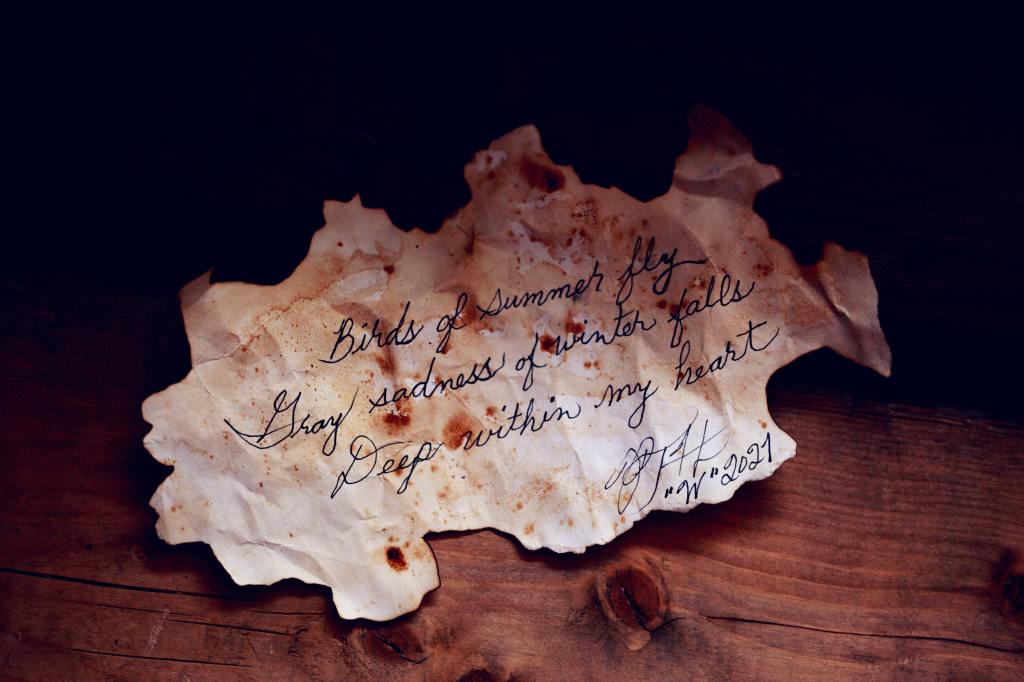
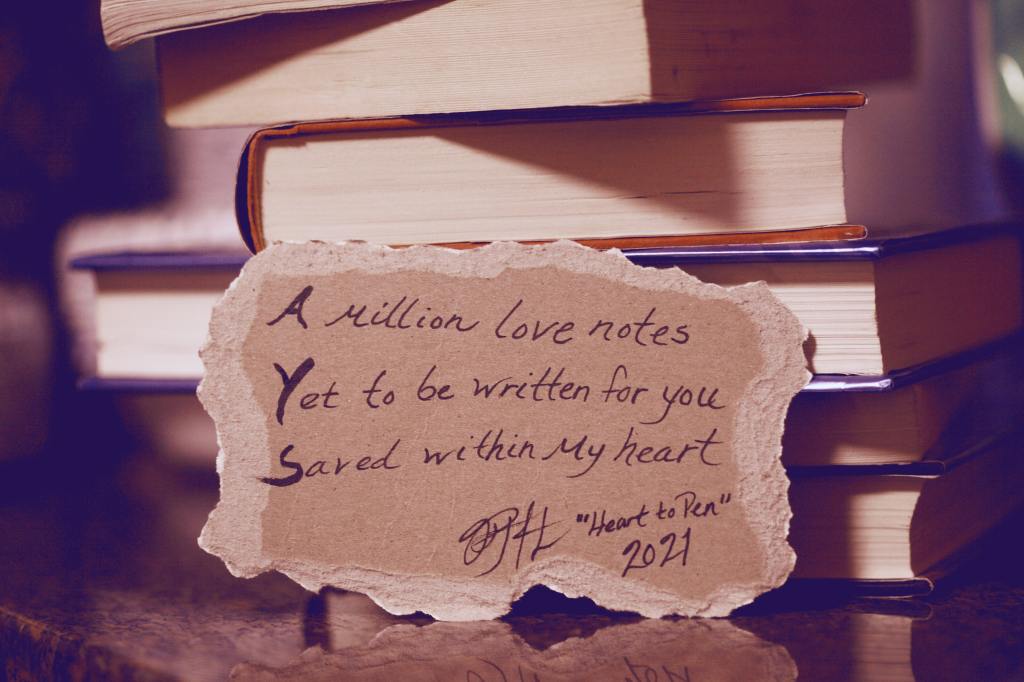
Haiku is a traditional form of Japanese poetry that has gained worldwide popularity for its simplicity and elegance. It consists of just three lines, with a strict syllable pattern of 5-7-5 syllables per line. Despite its small size, a haiku can convey powerful emotions, deep thoughts, and vivid images.
Photo by Yuma Kim
Haiku originated in Japan in the 17th century as a part of the “hokku”, which was the opening verse of a collaborative poetry form called “renga”. Over time, the hokku became more popular on its own and evolved into what we now recognize as haiku. The first recognized haiku poet was Matsuo Basho, who lived in the late 1600s and is considered one of the greatest haiku poets of all time.
Haiku traditionally focuses on nature, capturing a moment in time and a sense of the seasons. The best haikus evoke a clear image or feeling and often use sensory details, such as sights, sounds, or smells, to create a connection between the reader and the subject of the poem. The final line of a haiku often includes a “cutting word” that provides a sudden turn or shift in thought, adding depth to the poem.
Photo and Haiku by Poppy Thomas Hill
In its traditional form, haiku is written in Japanese, using seasonal references and a strict syllable pattern. However, modern haiku has evolved and expanded to include poems written in other languages and subjects beyond nature. Some contemporary haiku poets may also play with the syllable pattern, using fewer or more syllables per line.
Haiku has gained popularity around the world as a form of poetry that is easy to write and appreciate. Many people enjoy writing haikus as a form of self-expression and as a way to connect with nature and their own emotions. Haiku has also been used as a tool for meditation, mindfulness, and stress relief.
Haiku continues to evolve and adapt, with new forms and styles emerging all the time. However, its core elements remain the same: a focus on nature, a strict syllable pattern, and a desire to capture a moment in time and evoke a strong emotional response.
Photo and Haiku by Poppy Thomas Hill
In conclusion, a haiku is a form of Japanese poetry that has stood the test of time and continues to be popular and relevant today. Its simplicity and elegance make it accessible to poets and readers of all levels, while its focus on nature and the emotions it evokes make it a powerful tool for self-expression and mindfulness. Whether you are a seasoned poet or someone just looking to try your hand at writing, haiku is a wonderful form of poetry to explore. Stay tuned for a short overview of “Renga” coming soon on this blog!











 Zen Alpha Musings